I've been reading this and that the last few weeks, no bestsellers among them. Finally finished the huge WPA Guide to New York City, which is a delightful guidebook to what the Big Apple used to be. The guide was written in 1939 and has a preview of the World's Fair. I read the two Magickers books mentioned in an earlier entry, and in the last few days have been rereading some of my HTML books, which is my idea of fun. I have a few solid references I bought full price, but most of my HTML material has been gathered off remainder tables.
A good example is the web usability book I'm reading now, which discusses things as varied as alternative text for visually impaired people and using properly contrasting colors, including considering red-green colorblind persons when designing websites. I also enjoyed Wendy Peck's Web Menus with Beauty and Brains, discussing all types of website navigation, including text menus for faster loading, typography, color combinations, placement of menus, etc. I discovered in following one of her exercises that Earthlink does not support Server Side Includes, but Yahoo (my domain provider) does.
The one book I found most delightful this week was a re-read of a book I fell in love with in my elementary school library. I took this book out whenever I had the chance. The Christmas I was in fifth grade my mom went crazy trying to find a copy for me; alas, I think it was only printed for libraries or out of print. Most of the stores she inquired at thought she was crazy.
The book was Charlotte Baker's The Green Poodles. Nope, not psychedelic canines. The Greens are Aunt Lena and her wards, teenagers Ann and Charlie, and eleven-year-old Allan, who end up providing a home for the last member of the British branch of their family, eleven-year-old Fern, who brings her silver poodle Juliet with her. Aunt Lena's never liked dogs much, but Juliet provides them a good turn: it introduces them to a noted poodle breeder, who helps the struggling Greens by fostering some of her dogs with them. In the end, of course, the Greens make good, and a family mystery is even solved.
I found a copy of this book several years ago online and didn't realize until I re-read it for the first time since the 1960s that this is where I developed an early interest in dog obedience trials. Juliet and another of the dogs, Ravel, are not just bench (show) dogs, but obedience trial competitors. I remember now being fascinated by the concepts of heel off leash and stand for examination and long sit and long down, and when I wrote my own first story about a girl and her collie, she was training him for obedience competition.


06 March 2004
26 February 2004
My Life as a Book...
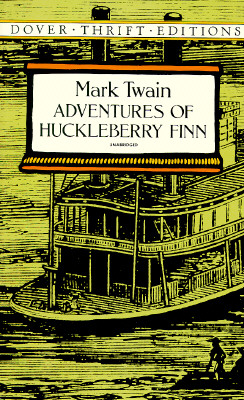
You're Adventures of Huckleberry Finn!
by Mark Twain
With an affinity for floating down the river, you see things in black and white. The world is strange and new to you and the more you learn about it, the less it makes sense. You probably speak with an accent and others have a hard time understanding you and an even harder time taking you seriously. Nevertheless, your adventurous spirit is admirable. You really like straw hats.
Take the Book Quiz
at the Blue Pyramid.
23 February 2004
Half Magic
Just finished Emily Drake's The Magickers and The Curse of Arkady.
DAW Books is billing these as "America's answer to Harry Potter."
Well...maybe. The few reviews I've read by children, who are, of course, the target audience, are mostly good. The few adult reviews I've read are universally bad.
Overall I'm not surprised. While Rowling is perfectly serious about her "Potterverse," there's a nice thread of humor running through all of her novels, whether it's with character names, situations, dog Latin spells, or pokes at Muggle politics and news. There is no subtle humor running through Drake at all, and her efforts to get us to believe that everything we're reading is real (Potter book references are scattered in the Magickers novels) just reinforce that this is a story, and her stereotypical characters (including your usual Native American character who "follows the old ways" and the bonny red-haired Irish lass who of course speaks with a brogue) don't make it any easier.
Not to mention that the books have some American conventions that have just gotten old.
For instance, Drake's adults are in general...well, stupid. There are good adults and bad adults in the Potterverse, but I can't really say any of them are stupid, not even the Dursleys. Drake's adults recruit our budding magic users from clever essay-writers, drop the ball ("Well, guess what, kids, you're potential Magickers!") on them when they get to camp (this after the kids are already suspicious from a really odd bus ride), and then don't even instruct them well enough when they first start magic use so that one of the students is lost in the ether for a week. And of course then it's not the adults who figure out what has happened, despite all their so-called skill, it's our hero, Jason Adrian. One can't imagine Dumbledore, McGonagal, or any of the Hogwarts staff being so thick.
Not to mention that in the second book, the children all believe they are victims of something called The Curse of Arkady. What is it? The author reveals this...in an interview which I read online. Is it mentioned in the book, even at the end? Noooo, we--and they--are supposed to figure it out for ourselves. (There is a surprise in the second book that I didn't expect, but it comes pretty late.)
Jason is a odd duck anyway. His mother died when he was small; a year or so later his father remarried, bringing him Joanna, his stepmother, and his stepsister. Then Jason's dad died and his stepmother married a building contractor, William "the Dozer" McGuire, leaving him in the odd situation of having two stepparents. Aha! you say. This sounds familiar. But no, the "Dozer" is not the evil stepdad, nor is Joanna an evil stepmother, yet the tiresome convention of our hero having to be in conflict with his parents is tossed in anyway. This kid spends two books agonizing if his stepparents even like him (this after they are willing to send him to an expensive soccer camp in the first book, just because he wants to go, and his stepmother fusses over him playing soccer because she's afraid it's too dangerous, and in the second book his stepdad purchases him a top-of-the-line computer although Jason only asks for something simple to do homework and get on the Internet with, plus also agrees Jason should get counseling when the school recommends it for the boy's well-being). It's as if the attitude is tossed in so that Jason will have something "in common" with the book's audience. Jason, hon, these folks do like you. I'm sure they even love you. Get a clue, okay?
Jason--surprise!--turns out to be a special type of Magicker, one whom the adults really need in their fight against the evil faction of their group. (Oh, goody, yet another evil splinter group.) He has a Potter contingent of running buddies, a girl named Bailey and a boy named Trent (who just happen to have a loving relationship with their parents, just like Hermoine and Ron), plus there's the awkward fat boy, the gorgeous girl, and the two Neanderthal types who actually do turn out to be good guys and a politically-correct racial mix of other kids who blend into the woodwork with astonishing ease. And lest one cliche be left out, there's also a cute animal character who appears midway in the first book.
Let's say I'm interested in enough of the plot threads and the characters to pick up the next one–when it comes out in paperback. Not sure if that makes me stubborn or just stupid. I am hoping Drake finally breaks the mold of predictable events and personalities and surprises me.
DAW Books is billing these as "America's answer to Harry Potter."
Well...maybe. The few reviews I've read by children, who are, of course, the target audience, are mostly good. The few adult reviews I've read are universally bad.
Overall I'm not surprised. While Rowling is perfectly serious about her "Potterverse," there's a nice thread of humor running through all of her novels, whether it's with character names, situations, dog Latin spells, or pokes at Muggle politics and news. There is no subtle humor running through Drake at all, and her efforts to get us to believe that everything we're reading is real (Potter book references are scattered in the Magickers novels) just reinforce that this is a story, and her stereotypical characters (including your usual Native American character who "follows the old ways" and the bonny red-haired Irish lass who of course speaks with a brogue) don't make it any easier.
Not to mention that the books have some American conventions that have just gotten old.
For instance, Drake's adults are in general...well, stupid. There are good adults and bad adults in the Potterverse, but I can't really say any of them are stupid, not even the Dursleys. Drake's adults recruit our budding magic users from clever essay-writers, drop the ball ("Well, guess what, kids, you're potential Magickers!") on them when they get to camp (this after the kids are already suspicious from a really odd bus ride), and then don't even instruct them well enough when they first start magic use so that one of the students is lost in the ether for a week. And of course then it's not the adults who figure out what has happened, despite all their so-called skill, it's our hero, Jason Adrian. One can't imagine Dumbledore, McGonagal, or any of the Hogwarts staff being so thick.
Not to mention that in the second book, the children all believe they are victims of something called The Curse of Arkady. What is it? The author reveals this...in an interview which I read online. Is it mentioned in the book, even at the end? Noooo, we--and they--are supposed to figure it out for ourselves. (There is a surprise in the second book that I didn't expect, but it comes pretty late.)
Jason is a odd duck anyway. His mother died when he was small; a year or so later his father remarried, bringing him Joanna, his stepmother, and his stepsister. Then Jason's dad died and his stepmother married a building contractor, William "the Dozer" McGuire, leaving him in the odd situation of having two stepparents. Aha! you say. This sounds familiar. But no, the "Dozer" is not the evil stepdad, nor is Joanna an evil stepmother, yet the tiresome convention of our hero having to be in conflict with his parents is tossed in anyway. This kid spends two books agonizing if his stepparents even like him (this after they are willing to send him to an expensive soccer camp in the first book, just because he wants to go, and his stepmother fusses over him playing soccer because she's afraid it's too dangerous, and in the second book his stepdad purchases him a top-of-the-line computer although Jason only asks for something simple to do homework and get on the Internet with, plus also agrees Jason should get counseling when the school recommends it for the boy's well-being). It's as if the attitude is tossed in so that Jason will have something "in common" with the book's audience. Jason, hon, these folks do like you. I'm sure they even love you. Get a clue, okay?
Jason--surprise!--turns out to be a special type of Magicker, one whom the adults really need in their fight against the evil faction of their group. (Oh, goody, yet another evil splinter group.) He has a Potter contingent of running buddies, a girl named Bailey and a boy named Trent (who just happen to have a loving relationship with their parents, just like Hermoine and Ron), plus there's the awkward fat boy, the gorgeous girl, and the two Neanderthal types who actually do turn out to be good guys and a politically-correct racial mix of other kids who blend into the woodwork with astonishing ease. And lest one cliche be left out, there's also a cute animal character who appears midway in the first book.
Let's say I'm interested in enough of the plot threads and the characters to pick up the next one–when it comes out in paperback. Not sure if that makes me stubborn or just stupid. I am hoping Drake finally breaks the mold of predictable events and personalities and surprises me.

13 February 2004
Angels and Demons
Despite the "hook" at the beginning, it took me a long time to get into this book, and by then things had started to sound familiar. I couldn't figure out why until Wednesday night. Half asleep in bed, I mused over incredible feats, clues and ciphers followed, mysterious buildings, staccato sentences, short cliffhanger chapters predominating...then it hit me. The Circus Boys, The Boy Aviators, The Pony Rider Boys, The Campfire Girls...all those old children's adventure series novels I've been downloading from Black Mask. Dan Brown's taken them all, mixed them together, added modern adult props--sex, graphic violence, computers, conspiracy theories, a touch of the (so-called) occult--tossed bits of Indiana Jones in, and come up with Angels and Demons. Somewhere along the line Phil Forrest of the Circus Boys and Robert Langdon have to be related.
Not that it doesn't draw you in with its theories about Illuminati, Masons, and the Catholic church--not to mention that twist at the end that's a doozy. It's a skillful juggling of plot in underground laboratories, underground vaults, underground libraries, hidden pyramids, hidden symbols, dark corners, dark chapels, dark squares and dark towers. I was told by someone that the revelations in this novel are "scary." What scares me is that, apparently according to reviews I'm reading, there are folks out there that think this rubbish is real. Good God, between Dan Brown and Anne Perry, you've got enough conspiracy theories to do another season of The X-Files. There's a reason they call this "fiction," folks.
Sigh. If you want to read a good novel with occult leanings and secret societies which is so well-written that you'll wonder if it was true, go find a copy of Katharine Kurtz's Lammas Night, okay? Angels and Demons works as pulp, but that's about it.
Not that it doesn't draw you in with its theories about Illuminati, Masons, and the Catholic church--not to mention that twist at the end that's a doozy. It's a skillful juggling of plot in underground laboratories, underground vaults, underground libraries, hidden pyramids, hidden symbols, dark corners, dark chapels, dark squares and dark towers. I was told by someone that the revelations in this novel are "scary." What scares me is that, apparently according to reviews I'm reading, there are folks out there that think this rubbish is real. Good God, between Dan Brown and Anne Perry, you've got enough conspiracy theories to do another season of The X-Files. There's a reason they call this "fiction," folks.
Sigh. If you want to read a good novel with occult leanings and secret societies which is so well-written that you'll wonder if it was true, go find a copy of Katharine Kurtz's Lammas Night, okay? Angels and Demons works as pulp, but that's about it.
11 February 2004
The Older Brother You Always Wished You Had
As I mentioned in an earlier post, I had some problem with "classics" as a child because I preferred reading animal stories.
This didn't go for all classics. I adored Rebecca Randall, she of Sunnybrook Farm, and Rose Campbell, the sole girl among the Eight Cousins, for instance, and the Miss Pickerel and Danny Dunn books they had at school. But the moment the love story in a classic reared its ugly head--like Meg and John Brooke--I was outta there.
Which explains why I never got through Gene Stratton Porter's Freckles as a kid, even though my mom had bought me the Whitman copy. I thought Freckles himself was brave, having survived what was described as a brutal childhood and the loss of a hand, and the Limberlost sounded like a delightfully mysterious place. But oh, my, then came the mooning over the Swamp Angel and I was gone.
I finally got through Freckles after reading A Girl of the Limberlost, in which an older Freckles and Swamp Angel appear, as an adult. Elnora's story was more compelling that Freckles', I thought, especially the revelation and reformation of embittered Kate Comstock (I was particularly fascinated in the chapter where Kate "peels" her skin so she will look more like a respectable city woman), even if I skimmed a lot of the fulsome love story chapters.
Recently I finished my latest foray into Porter, Laddie: A True Blue Story, as an e-Book, which I loved. So far it is my favorite of her books.
Laddie is the eldest of the twelve Stanton children still left at home on the big sprawling farmstead in the Indiana hills. His story, that of his love for "the Princess" a.k.a. Miss Pamela Pryor and of his final decision to be a farmer despite his education, is told by the youngest member of the household, "Little Sister" as everyone calls her, who seems to be about eight. (She says she has an old-fashioned--and, presumably as religious as the family is, probably Biblical--name, but she is always called "Little Sister," Laddie's nickname for her.) Little Sister, in her delightful, exuberant voice, also addresses the problem of the cold spinster schoolteacher who boards with the Stantons, the mystery of "the Princess'" unfriendly father, her sister Sally's wedding, her musical sister Shelley's romantic problems, and the adventures of her other brother, mischievous Leon, who for one-heart stopping chapter looks like he might end up the family disgrace--not to mention the leitmotif of most Porter novels, the love of birds and nature.
Although it's as decidedly as old-fashioned as Little Sister's real name given its era, this is also a very funny and very sentimental book, with some moments of high adventure and drama, not to mention lovely descriptions of the beautiful countryside. Some of these older books appall me or bore me; Laddie is neither appalling nor boring. He's the older brother everyone wishes they had. Recommended.
This didn't go for all classics. I adored Rebecca Randall, she of Sunnybrook Farm, and Rose Campbell, the sole girl among the Eight Cousins, for instance, and the Miss Pickerel and Danny Dunn books they had at school. But the moment the love story in a classic reared its ugly head--like Meg and John Brooke--I was outta there.
Which explains why I never got through Gene Stratton Porter's Freckles as a kid, even though my mom had bought me the Whitman copy. I thought Freckles himself was brave, having survived what was described as a brutal childhood and the loss of a hand, and the Limberlost sounded like a delightfully mysterious place. But oh, my, then came the mooning over the Swamp Angel and I was gone.
I finally got through Freckles after reading A Girl of the Limberlost, in which an older Freckles and Swamp Angel appear, as an adult. Elnora's story was more compelling that Freckles', I thought, especially the revelation and reformation of embittered Kate Comstock (I was particularly fascinated in the chapter where Kate "peels" her skin so she will look more like a respectable city woman), even if I skimmed a lot of the fulsome love story chapters.
Recently I finished my latest foray into Porter, Laddie: A True Blue Story, as an e-Book, which I loved. So far it is my favorite of her books.
Laddie is the eldest of the twelve Stanton children still left at home on the big sprawling farmstead in the Indiana hills. His story, that of his love for "the Princess" a.k.a. Miss Pamela Pryor and of his final decision to be a farmer despite his education, is told by the youngest member of the household, "Little Sister" as everyone calls her, who seems to be about eight. (She says she has an old-fashioned--and, presumably as religious as the family is, probably Biblical--name, but she is always called "Little Sister," Laddie's nickname for her.) Little Sister, in her delightful, exuberant voice, also addresses the problem of the cold spinster schoolteacher who boards with the Stantons, the mystery of "the Princess'" unfriendly father, her sister Sally's wedding, her musical sister Shelley's romantic problems, and the adventures of her other brother, mischievous Leon, who for one-heart stopping chapter looks like he might end up the family disgrace--not to mention the leitmotif of most Porter novels, the love of birds and nature.
Although it's as decidedly as old-fashioned as Little Sister's real name given its era, this is also a very funny and very sentimental book, with some moments of high adventure and drama, not to mention lovely descriptions of the beautiful countryside. Some of these older books appall me or bore me; Laddie is neither appalling nor boring. He's the older brother everyone wishes they had. Recommended.
07 February 2004
Especially Gladys
I first met Gladys Taber in junior high.
Oh, not in person. She lived in Connecticut and I was just this kid in Rhode Island. But as I haunted the Hugh B. Bain library for something of interest, I found a copy of her Especially Dogs...Especially at Stillmeadow.
I was "the kid without a dog." That's how I thought of myself. Even into my teens, I didn't want a boyfriend--men required too much darn maintenance, I knew from dealing with my father and uncles--or a pretty dress. Well, maybe I wanted a bike, too. I finally got a bike in ninth grade after Dr. Sarni and I convinced Dad I wasn't going to get run over by some crazy driver. But I never got the dog because of my allergies. It would have to live outside if we had one, Dr. Freedman said, and even then he couldn't recommend it.
So I coveted everyone else's dogs and read dog books. And that's how I met Gladys Taber and her Irish setters Maeve and Holly, and the cocker spaniels Honey and Teddy and Kon-tiki and Sister and Star. While reading about her dogs I also learned something about her 200-year-old farmhouse, Stillmeadow. At some point, I did find one of her Stillmeadow books, but I wasn't quite old enough for it yet. I was still into animals and adventure, and her lyrical prose about country living was as yet too tame for me.
Yet something about her writing lurked in me for years. In May of 1998 we visited my mother and took James to Mystic Seaport. As I scanned the bookshelves in the gift shop a familiar word appeared before my eyes. "Oh, my ears and whiskers! Stillmeadow books!" James and Mom didn't get it. My heart did.
I took these paperback reprints home and devoured them. When I got done I hunted down a couple of her books at the library and realized I wanted all of them. The Good Lord gave us the internet for something wonderful: finding out-of-print books. And so I found them on Bookfinder.com and on E-bay for a few dollars each and felt rich as Bill Gates as I read Mrs. Taber's lovely prose: the hardships and happiness of country living, her lively dogs and eccentric cats, her friend Jill who shared the home with her after the death of her [Jill's] husband, the birds and other animals and also the plants of the surrounding countryside, her friendships, her views on the seasons and on life. Now with a home of my own, although decidedly suburb-bound, I was kin with her.
This essay on Gladys Taber was prompted by the fact that I picked up her novel Mrs. Daffodil in the library last week. She wrote a monthly column for the Ladies' Home Journal and later Family Circle, plus short stories--and also had several works of fiction published, none of which I had read.
What a delight to find then that Mrs. Daffodil is simply a novelization--all names filed off, of course--of her life at Stillmeadow with dogs and companion, with episodes sad and absurd...possibly so absurd that they were the reason they never made it into her Stillmeadow books. Mrs. Daffodil, like Gladys Taber, writes a monthly column called "Butternut Wisdom," shares her house "Driftway" with her friend Kay, an Irish setter and numerous cocker spaniels, greets unexpected visitors who admire her column (they always show up at the wrong time), deals with sad times in the community, her daughter's romance, endless attempts at getting hired help and starting yet another diet, and yet always, despite the disasters, finds joy in the surroundings and people around her.
For Stillmeadow fans, it's just another delight to read and enjoy.
Gladys Taber's Stillmeadow website
Oh, not in person. She lived in Connecticut and I was just this kid in Rhode Island. But as I haunted the Hugh B. Bain library for something of interest, I found a copy of her Especially Dogs...Especially at Stillmeadow.
I was "the kid without a dog." That's how I thought of myself. Even into my teens, I didn't want a boyfriend--men required too much darn maintenance, I knew from dealing with my father and uncles--or a pretty dress. Well, maybe I wanted a bike, too. I finally got a bike in ninth grade after Dr. Sarni and I convinced Dad I wasn't going to get run over by some crazy driver. But I never got the dog because of my allergies. It would have to live outside if we had one, Dr. Freedman said, and even then he couldn't recommend it.
So I coveted everyone else's dogs and read dog books. And that's how I met Gladys Taber and her Irish setters Maeve and Holly, and the cocker spaniels Honey and Teddy and Kon-tiki and Sister and Star. While reading about her dogs I also learned something about her 200-year-old farmhouse, Stillmeadow. At some point, I did find one of her Stillmeadow books, but I wasn't quite old enough for it yet. I was still into animals and adventure, and her lyrical prose about country living was as yet too tame for me.
Yet something about her writing lurked in me for years. In May of 1998 we visited my mother and took James to Mystic Seaport. As I scanned the bookshelves in the gift shop a familiar word appeared before my eyes. "Oh, my ears and whiskers! Stillmeadow books!" James and Mom didn't get it. My heart did.
I took these paperback reprints home and devoured them. When I got done I hunted down a couple of her books at the library and realized I wanted all of them. The Good Lord gave us the internet for something wonderful: finding out-of-print books. And so I found them on Bookfinder.com and on E-bay for a few dollars each and felt rich as Bill Gates as I read Mrs. Taber's lovely prose: the hardships and happiness of country living, her lively dogs and eccentric cats, her friend Jill who shared the home with her after the death of her [Jill's] husband, the birds and other animals and also the plants of the surrounding countryside, her friendships, her views on the seasons and on life. Now with a home of my own, although decidedly suburb-bound, I was kin with her.
This essay on Gladys Taber was prompted by the fact that I picked up her novel Mrs. Daffodil in the library last week. She wrote a monthly column for the Ladies' Home Journal and later Family Circle, plus short stories--and also had several works of fiction published, none of which I had read.
What a delight to find then that Mrs. Daffodil is simply a novelization--all names filed off, of course--of her life at Stillmeadow with dogs and companion, with episodes sad and absurd...possibly so absurd that they were the reason they never made it into her Stillmeadow books. Mrs. Daffodil, like Gladys Taber, writes a monthly column called "Butternut Wisdom," shares her house "Driftway" with her friend Kay, an Irish setter and numerous cocker spaniels, greets unexpected visitors who admire her column (they always show up at the wrong time), deals with sad times in the community, her daughter's romance, endless attempts at getting hired help and starting yet another diet, and yet always, despite the disasters, finds joy in the surroundings and people around her.
For Stillmeadow fans, it's just another delight to read and enjoy.
25 January 2004
Six Feet Under
Back in the early 1980s a co-worker recommended the Anne Perry Victorian mysteries starring Inspector Thomas Pitt and his wellborn wife Charlotte to me. I was immediately enchanted by the 1880s atmosphere and Perry's excellent writing. When she began a new series of books, taking place earlier in the century and featuring the dour William Monk and ex-Crimean War nurse Hester Latterly, I was drawn into their world as well.
I didn't think Perry could write a bad book, although her Ashworth Hall--I think it's Ashworth Hall, anyway; the one about the "Irish problem"--seemed interminable and it took me a while to read.
And then I picked up her newest, No Graves as Yet, a new series beginning at the opening of World War I. The protagonists in these books are two brothers, Matthew and Joseph, a secret service agent and a theology professor, respectively, who must solve the mystery of their parents' murder--and then Joseph must cope with the killing of one of his favorite students.
Sadly, Graves gives a new definition to the word "dry." I wondered if it were just me, but found many concurrent reviews of it on Amazon.com. I did get severely ticked off at one reviewer who said she didn't like it because there were "pages of details about a cricket match" and Perry used unfamiliar British terms. I guess this woman ranks up there with the nitwit who thought Harry Potter had to be translated for Americans. (And the "pages" of cricket details turned out to be about a page and a half.) Talk about the type of person who makes Americans look stupid and self-absorbed! I'm sure this woman won't be giving herself a treat by reading any Dorothy Sayers' Lord Peter Wimsey books in the future--too many "foreign" words and references, I'm sure!
If you must dislike Graves, do so because the characters are all paper dolls and if you took out the agonizing over upcoming war, social problems, and next moves, and Perry's interminable habit of describing every woman's attire and how she looks in it, the story itself would be about 75 pages long. But because it uses unfamiliar British terms? Gah.
I didn't think Perry could write a bad book, although her Ashworth Hall--I think it's Ashworth Hall, anyway; the one about the "Irish problem"--seemed interminable and it took me a while to read.
And then I picked up her newest, No Graves as Yet, a new series beginning at the opening of World War I. The protagonists in these books are two brothers, Matthew and Joseph, a secret service agent and a theology professor, respectively, who must solve the mystery of their parents' murder--and then Joseph must cope with the killing of one of his favorite students.
Sadly, Graves gives a new definition to the word "dry." I wondered if it were just me, but found many concurrent reviews of it on Amazon.com. I did get severely ticked off at one reviewer who said she didn't like it because there were "pages of details about a cricket match" and Perry used unfamiliar British terms. I guess this woman ranks up there with the nitwit who thought Harry Potter had to be translated for Americans. (And the "pages" of cricket details turned out to be about a page and a half.) Talk about the type of person who makes Americans look stupid and self-absorbed! I'm sure this woman won't be giving herself a treat by reading any Dorothy Sayers' Lord Peter Wimsey books in the future--too many "foreign" words and references, I'm sure!
If you must dislike Graves, do so because the characters are all paper dolls and if you took out the agonizing over upcoming war, social problems, and next moves, and Perry's interminable habit of describing every woman's attire and how she looks in it, the story itself would be about 75 pages long. But because it uses unfamiliar British terms? Gah.
15 January 2004
She Talks to the Trees
My Christmas book collection is becoming positively enormous. It's expanded to fill three shelves, and the books are starting to double back on themselves. Considering the quantity of Christmas books that the publishers pump out every year, you might not think that's a lot, but I don't buy Christmas books that are about recipes or crafts, which kills about 90 percent of them. I buy either books of Christmas stories, or books about Christmas customs in other countries, or in past centuries.
I also have a couple of books about the pagan antecedents of the holidays, When Santa Was a Shaman and The Winter Solstice, and am always interested in checking out more, which is why I noticed Dorothy Morrison's Yule when it was first published. It looked pretty lightweight when I paged through it and the majority of the reviews I saw were negative.
I found it at the local remainder sale for only $2.50. That's about what it's worth. I read it in a couple of hours and was pretty underwhelmed. Call it "Paganism Lite." I know that folks who practice Wicca do use little spells and incantations to connect them with the spiritual world, but the little rhymes Morrison suggests in this book read as cutsey in the extreme. I had this vision of real pagans rolling their eyes at the text.
I also have a couple of books about the pagan antecedents of the holidays, When Santa Was a Shaman and The Winter Solstice, and am always interested in checking out more, which is why I noticed Dorothy Morrison's Yule when it was first published. It looked pretty lightweight when I paged through it and the majority of the reviews I saw were negative.
I found it at the local remainder sale for only $2.50. That's about what it's worth. I read it in a couple of hours and was pretty underwhelmed. Call it "Paganism Lite." I know that folks who practice Wicca do use little spells and incantations to connect them with the spiritual world, but the little rhymes Morrison suggests in this book read as cutsey in the extreme. I had this vision of real pagans rolling their eyes at the text.
14 January 2004
Low Flight
Finally read Mercedes Lackey's The Silver Gryphon recently. I wasn't really fond of the Mage Wars trilogy, even if it did star an egotistical bird. :-) The third book is one of these restless-misunderstood-adolescents-go-out-on-their-own-and-get-into-a-lot- of-trouble stories. Of course, being Mercedes Lackey, they are knowledgeable restless-misunderstood-adolescents, etc. It really wasn't a bad story, but I finished it with the attitude that "I finally got it finished" rather than "Darn, that was good."
12 January 2004
Setting Up for DaVinci
I'd have to be on a desert island not to notice the popularity of Dan Brown's The DaVinci Code.
But I usually don't pay attention to best-sellers until my friends start talking about them.
This doesn't always work out for me. In high school days my best friend raved about Asimov's "Foundation" trilogy and bought me the three-book paperback set for Christmas one year. Sorry to say I did not get past the first chapter in the first book. Much later in my life friends tried to get me hooked on Katherine Kurtz's Deryni books. Again, I couldn't get past the first couple of chapter in the first book, although I adore the Adept novels she has co-written with Deborah Turner Harris.
However, our friends recommending this newest bestseller advised me to start with the DaVinci prequel, Angels and Demons, before starting on it, as it introduces the lead male character. Their descriptions of both books sounded rather chilling. Well, I've started Angels and Demons and don't know what to think. I do want to know what happens next, but I don't find the whole thing so scary as everyone says. Maybe I'm not far enough into it? I'm also not an American that thinks Americans "invented" the Web. I know about Tim Berners-Lee and CERN.
Perhaps I just need to get past the expositionary material.
But I usually don't pay attention to best-sellers until my friends start talking about them.
This doesn't always work out for me. In high school days my best friend raved about Asimov's "Foundation" trilogy and bought me the three-book paperback set for Christmas one year. Sorry to say I did not get past the first chapter in the first book. Much later in my life friends tried to get me hooked on Katherine Kurtz's Deryni books. Again, I couldn't get past the first couple of chapter in the first book, although I adore the Adept novels she has co-written with Deborah Turner Harris.
However, our friends recommending this newest bestseller advised me to start with the DaVinci prequel, Angels and Demons, before starting on it, as it introduces the lead male character. Their descriptions of both books sounded rather chilling. Well, I've started Angels and Demons and don't know what to think. I do want to know what happens next, but I don't find the whole thing so scary as everyone says. Maybe I'm not far enough into it? I'm also not an American that thinks Americans "invented" the Web. I know about Tim Berners-Lee and CERN.
Perhaps I just need to get past the expositionary material.
10 January 2004
Return to P.E.I.
Would you believe I'd never read the Anne books of L.M. Montgomery until I was an adult? It wasn't surprising--as a child I really liked only animal stories. My mom bought me all the classics, and I had a very nice copy of Little Women, for example, but I never got past chapter six until after I was in my teens. It was, as I described it to my mother, when they started all that "icky stuff with Meg and Mr. Brooke." :-)
Anne was also only in hardback when I was a kid. I only got the cheap Whitman hardbacks; we couldn't afford the more pricey ones, which is why I was Trixie Belden-deprived as a youngster. Whitman started issuing Trixie in their cheap editions just about the time I went to work, and I bought all of them, as well as paperbound copies of all those Marguerite Henry horse stories I used to lust over at the library.
I finally made Anne Shirley's acquaintance via Kevin Sullivan's delightful miniseries for the Disney Channel, and promptly went out and bought the entire eight-book set.
Like any books written in the past, they use terms that were familiar at the time that people may no longer understand. Some folks don't like slogging through old-fashioned talk, but I revel in the dated words. But even with enjoying them, sometimes it's hard to figure out what's going on or what a certain comparison means; needless to say I love annotated books. I have an annotated copy of A Christmas Carol and I was delighted when I found out there was a annotated version of Anne.
Well, until I saw the price. It was a small press print and it was released at $35.
I hunted about a couple of years for it at a lower price and was about resigned to paying $29 for a used copy when I ran into a bona-fide miracle: I found a copy in a used bookstore I went into on a whim. It was slightly water-damaged, but 90 percent nice, and delightful to read: now I know what a "Grit" is, and all sorts of other things Avonlea, Canadian, and 19th century. The book also contains a short biography of Maud Montgomery (as she was known) paralleling her life to Anne's, original reviews of the book (Mark Twain was one of Anne's big fans), illustrations from different editions of the book, etc.
Anne was also only in hardback when I was a kid. I only got the cheap Whitman hardbacks; we couldn't afford the more pricey ones, which is why I was Trixie Belden-deprived as a youngster. Whitman started issuing Trixie in their cheap editions just about the time I went to work, and I bought all of them, as well as paperbound copies of all those Marguerite Henry horse stories I used to lust over at the library.
I finally made Anne Shirley's acquaintance via Kevin Sullivan's delightful miniseries for the Disney Channel, and promptly went out and bought the entire eight-book set.
Like any books written in the past, they use terms that were familiar at the time that people may no longer understand. Some folks don't like slogging through old-fashioned talk, but I revel in the dated words. But even with enjoying them, sometimes it's hard to figure out what's going on or what a certain comparison means; needless to say I love annotated books. I have an annotated copy of A Christmas Carol and I was delighted when I found out there was a annotated version of Anne.
Well, until I saw the price. It was a small press print and it was released at $35.
I hunted about a couple of years for it at a lower price and was about resigned to paying $29 for a used copy when I ran into a bona-fide miracle: I found a copy in a used bookstore I went into on a whim. It was slightly water-damaged, but 90 percent nice, and delightful to read: now I know what a "Grit" is, and all sorts of other things Avonlea, Canadian, and 19th century. The book also contains a short biography of Maud Montgomery (as she was known) paralleling her life to Anne's, original reviews of the book (Mark Twain was one of Anne's big fans), illustrations from different editions of the book, etc.
Subscribe to:
Posts (Atom)