• Autumn, Susan Branch
I adore Branch's wonderful whimsical watercolor handwritten books, but they can be pricy, which is why I scooped up this from the remainder table with glee. Poetry, recipes, minute illustrations, quotations, memories, all about the fall of the year, Thanksgiving, and Hallowe'en.
• Re-read: Up the Down Staircase, Bel Kaufman
I picked up my original copy of this book from the metal racks at Nayco, the Woolworth's knockoff that occupies the old Woolworth's on Rolfe Street in Cranston, RI (or at least it still did as late as two years ago). I had heard of the book and the movie, but thought it was a dull narrative about a schoolteacher in the inner city until I saw the clever way the tale was told, with letters, school bulletins, memos, minutes, notebooks, and the frank student suggestion box entries from the teachers and students at the fictional but all-too-real "Calvin Coolidge High School." The memorable characters are by now family: idealistic new teacher Sylvia Barrett, the wise Bea Schacter, the flippant Paul Barringer, the kids including Alice Blake, Carole Blanca, Jose Rodriguez, and of course the "Adm. Ass." himself, J.J. McHabe and troublemaker Joe Ferone.
• Take Big Bites, Linda Ellerbee
A gourmet meal and the best dessert ever, all in one book. I have Ellerbee's previous two books and this is just as delightfully written. This time it's Ellerbee's adventures around the world and within herself, whether it's befriending people in Italy or Greece or England or taking on river rapids and hiking along the Thames. She lives with gusto and it spills out in a joyous celebration in this delightful set of tales (with some soul-searching along the way). Go on, take big bites.
• Murder in Little Italy, Victoria Thompson
The next (in paperback, anyway) in Thompson's series of mysteries about Sarah Brandt, widowed midwife in the poverty-stricken areas of Victorian New York City. This time she's mixed up in a murder that develops after a supposedly premature baby is born looking full-term to an Irish girl who married into a contentious Italian family, sparking off not only a police investigation but a gang war between the Irish and the Italians. Sarah's growing romance with Frank Malloy continues to move at a glacial pace as he grows no closer looking into the death of her husband, Dr. Tom Brandt, who she married despite the disapproval of her wealthy parents. Another good look at the sad, desperate lives of the poor in the 19th century along with a perplexing mystery.
• Treasury of Easter Celebrations
An Ideals gift-book size publication with lovely photos, poetry.
• The Flight of the Silver Turtle, John Fardell
Fardell's sequel to his cracking tale, 7 Professors of the Far North, isn't quite up to its predecessor, but it's great for nonstop action in the vein of those great old kids' series like Danny Dunn, with a touch of John Verney's Callendar family stories to boot, which takes off almost immediately. Each of the kids—Sam, Zara, Ben, Marcia, and Adam—get to use his or her own particular talent to again help the adults out of a jam, which involves the mystery of a hidden secret from World War II. The novel transportation feature the children use in the first book is just so memorable that the ones featured in the sequel pale slightly in comparison. Also, the villains of this novel seem more like conventional Doctor Who-type meglomaniacs as opposed to the sinister machinations in the original, which reminded me of the sinister menace in Pullman's The Golden Compass (Northern Lights). Best of all, the children are smart but not smartass, and the adults are not stooges for the kids.
• A Time to Remember, Ideals
Nostalgic poetry and essays, with the usual lovely Ideals photography.
• The Merry Christmas Book, Ideals
As always with their annual releases, contained are lovely winter photos, filler drawings, and nostalgic or thoughtful poetry or essays. These books are meant for curling up with a fleece throw on a sofa on a chilly day, to read and sip a hot beverage.
• The New Guideposts Christmas Treasury
A Guideposts collection of inspirational, thoughtful, and often amusing stories about families discovering the Christmas spirit. As far as I'm concerned, there can't be too many books that remind folks that Christmas isn't about getting big-box gifts and becoming a glutton. Even if you're not a churchgoer, these gentle stories, interspersed with poetry, recall close times with those you love.
• The Old Iron Road, David Haward Bain
In 1999, David Bain published Empire Express, a history of the building of the United States' first transcontinental railroad. He then took his wife and two children on a 7,000 mile automobile odyssey, following the route of the railroad (with several detours in Nevada) and the old Lincoln Highway, from Kansas City to San Francisco. This is the engaging detail-crammed story of that trip. Bain mixes history, trivia, Old West personalities, pioneer tales, landscapes, fellow history buffs, railroading—not to mention the story of the family trip—in marvelous detail. Along the way they visit museums, ghost towns, old railroad cuts, scenes of triumph and scenes of disaster: Promontory Point, Donner Lake, the track of the Humboldt (which Alistair Cooke so movingly described in one sequence of America) and more. Maybe a bit of my fondness for this narrative is due to the two cross-country trips I took with my parents in the 1970s (although we stuck to the interstate and didn't visit any of the fascinating places Bain talks about) as I recall those majestic or forbidding landscapes we traversed in our own car.


19 May 2007

15 May 2007
Books Read Since April 23
• Re-read: Stranger in a Strange Land, Robert Heinlein
I used to belong to the Doubleday Bargain Book Club and once tried to order this; even though I was in my teens Mom put the kibosh on it when she read the description of it being "an underground classic." In high school I bought the paperback copy. Heinlein is always readable, even if the text turns organized religions on their head. I've read criticisms of Jubal Harshaw, and he does pontificate a bit much, but I've always had a sneaking fondness for the old coot.
• Rebel Angels, Libba Bray
I have to admit, I liked A Great and Terrible Beauty with enough interest to go out and get this next book in the series. If nothing else, I want to see what happens to Ann, the charity pupil whose rich relatives are sending her to school just to train her as a governess for their children. What a horrible prospect! The fangirl commentary about heroine Gemma and her relationship with the exotic Indian boy who is supposed to be defeating her gets a bit thick at times, though.
• Watch Your Language, Robert Gorrell
This was an okay book about English grammar and linguistics I bought at the library sale. The most interesting part was the intriguing cover illustrating idioms, including a carrot-man eating a carrot ("you are what you eat") which has "cauliflower ears."
• Penny From Heaven, Jennifer Holm
I simply loved this book. It's the story of Barbara Ann Falucci, nicknamed "Penny," a fatherless girl growing up torn between her WASP mother's world (she and her mother live with her mother's parents) and the world of her father's large, complicated but loving Italian family in 1953. Since both my sets of grandparents came from Italy, I'm usually wary of books that contain Italian families; they are either ga-ga over the Mafia or do not seem authentic. I was in love with Penny's wonderful paternal family immediately; I knew all these people from my own experience. My dad's mother even did her cooking at a gas-converted coal stove in the basement because it was cooler in summer and she didn't want to "mess up" the nice kitchen upstairs! The food (sfogliatelles!), the homes, the loving uncles, the men torn between pleasing their mothers or their wives, the one male cousin who's always in trouble, Grandma dressed in black making homemade macaroni and homemade gravy (not "pasta" and "sauce," which are "Med-i-gone" terms!)...wow, it took me all back. Holm has the early 50s atmosphere down pat...I wished I could open a door and go back to meet all her characters, visit the Sweet Shoppe and the family butcher shop, and listen to "Dem Bums" on the radio. I also was drawn into the growing mystery about Penny's father, which exposes a chapter in history that most people have never heard of. I'm glad I decided to purchase this book; if you are Italian, this is a must have.
• Re-read: The Adventures of Huckleberry Finn, Mark Twain
Absolutely one of my favorite books in the world, although the business with Tom Sawyer at the end makes me want to shake the foreign-romance-obsessed Tom. Huck's growing realization that Jim is not "property" but a man is as absorbing on the 20th read as on the first. I read Finn on my own at age twelve and was quite annoyed when we didn't read it again in ninth grade; later in college I did an essay about my favorite character in the book, the poor deceased Emmaline Grangerford, so warped by her family's feud with the Shepherdson clan that she continually obsessed over funerary art and poetry.
• Why Don't Woodpeckers Get Headaches?, Mike O'Connor
Bird information and trivia written with a light hand by a Cape Cod newspaper columnist and wild bird store owner. My favorite: O'Connor's response to a man who wants to buy "a bird bath for my wife": he asks how large the wife is. :-)
• Re-read: The Sidetracked Sisters' Happiness File, Pam Young and Peggy Jones
Back when our office was still in the Buckhead section of Atlanta, a remainder book sale opened in an abandoned store and continued for at least a year. I'd walk to the store at least once a week and accumulated quite a collection at bargain prices. I had over a dozen books about babies and children preparatory to the time when I might get pregnant; when it didn't work out I packed them away and eventually gave them to Goodwill. I bought Cantor's wonderful Where the Old Roads Go, about traveling the state highways of New England, Pullman's Ruby in the Smoke and Shadow in the North, a "bathroom book" about the unusual subjects people do newsletters about, a book on organizing, and divers others.
One of the others was Pam Young and Peggy Jones' "Sidetracked Sisters" books about their efforts to conquer disorganization in their homes by using a system of 3x5 reminder cards. Their amusing texts covered the home, and then the kitchen, but this book, the Happiness File is my favorite of them, about achieving personal goals using the same methods. Pam and Peggy are like old friends.
• The Complete Encyclopedia of Dog Breeds, Juliette Cunliffe
I suppose we needed yet another book about dog breeds like I need the proverbial hole in my head; however, this was published in Britain, with the UK dog classifications, and half the book is not about breeds, but about dogs in general (carriage dogs, turnspit dogs, how Crufts started, dogs in history, dogs in art, etc.) and rare breeds are also featured.
• And, of course, preparing for the Big Event in July, have re-read: Harry Potter and the Order of the Phoenix and Harry Potter and the Half-blood Prince.
I am presently reading the great The Old Iron Road, about a family who follows the trail of the pioneers from Missouri to California, mostly traveling along the old Lincoln Highway, and about the history (the Transcontinental Railroad, the Indian Wars), personalities (Willa Cather, John C. Frémont), and other points of interest observed. Great stuff, and haven't even left Nebraska yet.
I used to belong to the Doubleday Bargain Book Club and once tried to order this; even though I was in my teens Mom put the kibosh on it when she read the description of it being "an underground classic." In high school I bought the paperback copy. Heinlein is always readable, even if the text turns organized religions on their head. I've read criticisms of Jubal Harshaw, and he does pontificate a bit much, but I've always had a sneaking fondness for the old coot.
• Rebel Angels, Libba Bray
I have to admit, I liked A Great and Terrible Beauty with enough interest to go out and get this next book in the series. If nothing else, I want to see what happens to Ann, the charity pupil whose rich relatives are sending her to school just to train her as a governess for their children. What a horrible prospect! The fangirl commentary about heroine Gemma and her relationship with the exotic Indian boy who is supposed to be defeating her gets a bit thick at times, though.
• Watch Your Language, Robert Gorrell
This was an okay book about English grammar and linguistics I bought at the library sale. The most interesting part was the intriguing cover illustrating idioms, including a carrot-man eating a carrot ("you are what you eat") which has "cauliflower ears."
• Penny From Heaven, Jennifer Holm
I simply loved this book. It's the story of Barbara Ann Falucci, nicknamed "Penny," a fatherless girl growing up torn between her WASP mother's world (she and her mother live with her mother's parents) and the world of her father's large, complicated but loving Italian family in 1953. Since both my sets of grandparents came from Italy, I'm usually wary of books that contain Italian families; they are either ga-ga over the Mafia or do not seem authentic. I was in love with Penny's wonderful paternal family immediately; I knew all these people from my own experience. My dad's mother even did her cooking at a gas-converted coal stove in the basement because it was cooler in summer and she didn't want to "mess up" the nice kitchen upstairs! The food (sfogliatelles!), the homes, the loving uncles, the men torn between pleasing their mothers or their wives, the one male cousin who's always in trouble, Grandma dressed in black making homemade macaroni and homemade gravy (not "pasta" and "sauce," which are "Med-i-gone" terms!)...wow, it took me all back. Holm has the early 50s atmosphere down pat...I wished I could open a door and go back to meet all her characters, visit the Sweet Shoppe and the family butcher shop, and listen to "Dem Bums" on the radio. I also was drawn into the growing mystery about Penny's father, which exposes a chapter in history that most people have never heard of. I'm glad I decided to purchase this book; if you are Italian, this is a must have.
• Re-read: The Adventures of Huckleberry Finn, Mark Twain
Absolutely one of my favorite books in the world, although the business with Tom Sawyer at the end makes me want to shake the foreign-romance-obsessed Tom. Huck's growing realization that Jim is not "property" but a man is as absorbing on the 20th read as on the first. I read Finn on my own at age twelve and was quite annoyed when we didn't read it again in ninth grade; later in college I did an essay about my favorite character in the book, the poor deceased Emmaline Grangerford, so warped by her family's feud with the Shepherdson clan that she continually obsessed over funerary art and poetry.
• Why Don't Woodpeckers Get Headaches?, Mike O'Connor
Bird information and trivia written with a light hand by a Cape Cod newspaper columnist and wild bird store owner. My favorite: O'Connor's response to a man who wants to buy "a bird bath for my wife": he asks how large the wife is. :-)
• Re-read: The Sidetracked Sisters' Happiness File, Pam Young and Peggy Jones
Back when our office was still in the Buckhead section of Atlanta, a remainder book sale opened in an abandoned store and continued for at least a year. I'd walk to the store at least once a week and accumulated quite a collection at bargain prices. I had over a dozen books about babies and children preparatory to the time when I might get pregnant; when it didn't work out I packed them away and eventually gave them to Goodwill. I bought Cantor's wonderful Where the Old Roads Go, about traveling the state highways of New England, Pullman's Ruby in the Smoke and Shadow in the North, a "bathroom book" about the unusual subjects people do newsletters about, a book on organizing, and divers others.
One of the others was Pam Young and Peggy Jones' "Sidetracked Sisters" books about their efforts to conquer disorganization in their homes by using a system of 3x5 reminder cards. Their amusing texts covered the home, and then the kitchen, but this book, the Happiness File is my favorite of them, about achieving personal goals using the same methods. Pam and Peggy are like old friends.
• The Complete Encyclopedia of Dog Breeds, Juliette Cunliffe
I suppose we needed yet another book about dog breeds like I need the proverbial hole in my head; however, this was published in Britain, with the UK dog classifications, and half the book is not about breeds, but about dogs in general (carriage dogs, turnspit dogs, how Crufts started, dogs in history, dogs in art, etc.) and rare breeds are also featured.
• And, of course, preparing for the Big Event in July, have re-read: Harry Potter and the Order of the Phoenix and Harry Potter and the Half-blood Prince.
I am presently reading the great The Old Iron Road, about a family who follows the trail of the pioneers from Missouri to California, mostly traveling along the old Lincoln Highway, and about the history (the Transcontinental Railroad, the Indian Wars), personalities (Willa Cather, John C. Frémont), and other points of interest observed. Great stuff, and haven't even left Nebraska yet.
08 May 2007
A Sad Return
Incidentally, blackmask.com is now back, under the moniker of "Munsey's" (a classic Canadian magazine) with unfinished sections of the main page and a server so glacial that molasses in January would be quicker. But the e-books are still there.
23 April 2007
Stories for "Wide Awake" Youngsters
Many children's magazines flourished in the 19th century. While several were published by religious groups and featured highly-moral stories, others were secular, although milder moral stories were the rule, and disobedient children or those urchins who smoked or used slang were reformed (except in the weekly Youth's Companion, where even mention of tobacco or "drink" was forbidden).
While St. Nicholas was the most remembered of these publications and had the second-longest run, others were quite well-known during their time: Merry's Museum (edited for some time by Louisa May Alcott), Our Young Folks (whose merge with St. Nicholas upon the latter magazine's 1873 debut was unknown to editor J.T. Trowbridge until it was a fait accompli), and Wide Awake, published by Daniel Lothrop starting in 1875; he later married Harriet Mulford Stone, better known as "Margaret Sidney," whom he met when she submitted the first of the "Five Little Peppers" stories to the magazine. Wide Awake was also later bought out by St. Nicholas (in 1893).
Having finished my St. Nicholas collection, I thought I would add one or two other titles of the same time period, but so far I've only obtained some bound volumes of Wide Awake. My first was the June-November 1889 volume, "CC," my oldest, "R" from 1884 arrived today (but I won't be reading it for a while as it needs major repairs as did the "CC" volume). The oldest I have read at this point is "Z" from 1888.
In format, the Wide Awake volumes closely resemble St. Nicholas as well as other adult magazines of the time: two column 10-point type, with engravings as illustrations. It has a couple of regular features: "Men and Things," short anecdotes about discoveries, people, or even cute stories about the things small children say, and "Tangles," a short puzzle page.
I'm probably biased by my St. Nicholas collection, but the stories in Wide Awake seem a bit more didactic than those of its competitor. All the fiction, even the continuing adventures of the Pepper clan, seem to emphasize ideals and lessons learned; these qualities are also present in St. Nicholas despite Mary Mapes Dodge insistence that the magazine not be too didactic, but of a lesser emphasis. For instance, one continuing "serial" of Volumes BB and CC is a series of letters from "Daisy," a newly-married middle class young lady in Boston, to her friend "Pattie," in which Daisy usually works some instruction in good manners, for instance, how hurt she felt when a young woman she knew snubbed her due to the part of town she lived in and how snubbing is wrong, or how some of her old friends visit and show poor manners.
However, the Wide Awake volumes also have some articles about traveling in the 1800s that are fascinating and absorbing to read. Olive Risley Seward, for instance, has a series of travel narratives called "Around the World Stories" in which she talks about the dangers, hardships, and joys of two young women traveling the world, including trips to China and Java. Jessie Benton Frémont, wife of pioneer John C. Frémont, has a remarkable series of articles about Western pioneer life.
There are also numerous articles about life in foreign countries and stories about royalty, the latter which seemed to fascinate Americans in the late 19th century. Of course, as with all articles dealing with foreigners in those days, some customs are described as "queer" or "savage" or "barbaric," with American customs generally regarded as superior ("pretty" customs like Japanese flower arranging and other things of that nature are usually conceded as being a good thing, however, and often something that might be emulated in American homes).
There are even some articles in Wide Awake that seem more suited to adults of the time, and were probably written for older children, what we today would call high school/college age teenagers. "The Republican Court," for instance, is a long article about Martha Washington, Dolley Madison, and their contemporaries in "society" in early U.S. politics. A later series, "Children of the Presidents," discuss the offspring of George Washington through James Madison (at least of the issues I have) during both their childhood and adulthood.
The most unique portion of the magazine is the C.Y.F.R.U., the Chautauqua Young Folks' Reading Union. The Chautauqua movement began in 1874, "an adult education movement in the United States, highly popular in the late 19th and early 20th centuries. Chautauqua assemblies expanded and spread throughout rural America until the mid-1920s. The Chautauqua brought entertainment and culture for the whole community, with speakers, teachers, musicians, entertainers, preachers, and specialists of the day." Today we pop on the television or surf the internet and watch/read about these subjects and cannot really imagine how isolated communities, especially rural communities, were in the 1800s. Both men and women, and even children, flocked to Chautauqua meetings and classies that brought them knowledge of the outside world.
Wide Awake's Chautauqua sessions-in-articles include "Cooking in the Public Schools," which include lessons on how to make a proper fire in a cookstove and about basic cooking of bread and meat. There is a long series about famous gems and another about geologic and wilderness habitats. One series called "Our Asiatic Cousins," covering the "Hindoos" and other Asiatic peoples, was written by Mrs. A.H. Leonowens, the "Anna" of Anna and the King of Siam/The King and I.
Each C.Y.F.R.U. is concluded with "Search Questions" in various sections of history.
The format of Wide Awake, however, apparently changed between 1889 and 1891, the latter the most recent volume I have received. Perhaps the publisher, due to failing sales, decided to aim the publication more at younger children, because the majority of the articles in the 1891 volume are in larger type over one page instead of in columns, with a simpler vocabulary, and only twenty or so pages near the end of the issue revert to the two-column format with more adult themes (including Margaret Sidney's Five Little Peppers Grown Up).
It will be interesting to investigate this further.
While St. Nicholas was the most remembered of these publications and had the second-longest run, others were quite well-known during their time: Merry's Museum (edited for some time by Louisa May Alcott), Our Young Folks (whose merge with St. Nicholas upon the latter magazine's 1873 debut was unknown to editor J.T. Trowbridge until it was a fait accompli), and Wide Awake, published by Daniel Lothrop starting in 1875; he later married Harriet Mulford Stone, better known as "Margaret Sidney," whom he met when she submitted the first of the "Five Little Peppers" stories to the magazine. Wide Awake was also later bought out by St. Nicholas (in 1893).
Having finished my St. Nicholas collection, I thought I would add one or two other titles of the same time period, but so far I've only obtained some bound volumes of Wide Awake. My first was the June-November 1889 volume, "CC," my oldest, "R" from 1884 arrived today (but I won't be reading it for a while as it needs major repairs as did the "CC" volume). The oldest I have read at this point is "Z" from 1888.
In format, the Wide Awake volumes closely resemble St. Nicholas as well as other adult magazines of the time: two column 10-point type, with engravings as illustrations. It has a couple of regular features: "Men and Things," short anecdotes about discoveries, people, or even cute stories about the things small children say, and "Tangles," a short puzzle page.
I'm probably biased by my St. Nicholas collection, but the stories in Wide Awake seem a bit more didactic than those of its competitor. All the fiction, even the continuing adventures of the Pepper clan, seem to emphasize ideals and lessons learned; these qualities are also present in St. Nicholas despite Mary Mapes Dodge insistence that the magazine not be too didactic, but of a lesser emphasis. For instance, one continuing "serial" of Volumes BB and CC is a series of letters from "Daisy," a newly-married middle class young lady in Boston, to her friend "Pattie," in which Daisy usually works some instruction in good manners, for instance, how hurt she felt when a young woman she knew snubbed her due to the part of town she lived in and how snubbing is wrong, or how some of her old friends visit and show poor manners.
However, the Wide Awake volumes also have some articles about traveling in the 1800s that are fascinating and absorbing to read. Olive Risley Seward, for instance, has a series of travel narratives called "Around the World Stories" in which she talks about the dangers, hardships, and joys of two young women traveling the world, including trips to China and Java. Jessie Benton Frémont, wife of pioneer John C. Frémont, has a remarkable series of articles about Western pioneer life.
There are also numerous articles about life in foreign countries and stories about royalty, the latter which seemed to fascinate Americans in the late 19th century. Of course, as with all articles dealing with foreigners in those days, some customs are described as "queer" or "savage" or "barbaric," with American customs generally regarded as superior ("pretty" customs like Japanese flower arranging and other things of that nature are usually conceded as being a good thing, however, and often something that might be emulated in American homes).
There are even some articles in Wide Awake that seem more suited to adults of the time, and were probably written for older children, what we today would call high school/college age teenagers. "The Republican Court," for instance, is a long article about Martha Washington, Dolley Madison, and their contemporaries in "society" in early U.S. politics. A later series, "Children of the Presidents," discuss the offspring of George Washington through James Madison (at least of the issues I have) during both their childhood and adulthood.
The most unique portion of the magazine is the C.Y.F.R.U., the Chautauqua Young Folks' Reading Union. The Chautauqua movement began in 1874, "an adult education movement in the United States, highly popular in the late 19th and early 20th centuries. Chautauqua assemblies expanded and spread throughout rural America until the mid-1920s. The Chautauqua brought entertainment and culture for the whole community, with speakers, teachers, musicians, entertainers, preachers, and specialists of the day." Today we pop on the television or surf the internet and watch/read about these subjects and cannot really imagine how isolated communities, especially rural communities, were in the 1800s. Both men and women, and even children, flocked to Chautauqua meetings and classies that brought them knowledge of the outside world.
Wide Awake's Chautauqua sessions-in-articles include "Cooking in the Public Schools," which include lessons on how to make a proper fire in a cookstove and about basic cooking of bread and meat. There is a long series about famous gems and another about geologic and wilderness habitats. One series called "Our Asiatic Cousins," covering the "Hindoos" and other Asiatic peoples, was written by Mrs. A.H. Leonowens, the "Anna" of Anna and the King of Siam/The King and I.
Each C.Y.F.R.U. is concluded with "Search Questions" in various sections of history.
The format of Wide Awake, however, apparently changed between 1889 and 1891, the latter the most recent volume I have received. Perhaps the publisher, due to failing sales, decided to aim the publication more at younger children, because the majority of the articles in the 1891 volume are in larger type over one page instead of in columns, with a simpler vocabulary, and only twenty or so pages near the end of the issue revert to the two-column format with more adult themes (including Margaret Sidney's Five Little Peppers Grown Up).
It will be interesting to investigate this further.
19 April 2007
Books Read Since March 29
• A Great and Terrible Beauty, Libba Bray
I was caught up enough in this book about Victorian girls at a posh boarding school who become involved with magic to buy the sequel, although I do agree with the reviewers that all the characters are self-centered. However, most girls of that age are, and wealthy girls were brought up to be self-centered. I can't say the leading character is altogether likable, but she is absorbing to follow.
• Trouble in Spades, Heather Webber
I don't usually read second books in a series first, but I found this on the $1 spinner at Dollar General. It's about a woman who does landscaping who has recently been divorced, her prima-donna sister, and assorted other crazies. I found this cute but nothing special. I usually don't have problems with a multiple cast of characters, but all the players in this one made my head spin. Also it seems there were too many weird neighbors to go along with the weird relatives.
• Animals in Translation, Temple Grandin
I've seen this in paperback at the store, but this particular volume I found in hardback at the Smithsonian on discount. I was fascinated, not just due to the examination of how animals percieve the world differently, but also by the fact that the author is autistic, but has learned to cope with the chaotic (to her) world of the non-autistic. I have a friend with an autistic child, but his condition is more serious than the author's and it gave me an insight into his world.
• I started reading the Civil War mystery A Grave at Glorietta (another $1 spinner acquisition, since I'm not much of a Civil War buff), but I ended up forgetting it at the bank on Saturday morning and it wasn't worth going back for.
• The Rocking Chair Reader: Coming Home
This is a feel-good anthology of Chicken Soup for the Soul-like stories about people's memories of growing up and returning to the small towns where they either grew up or spent a lot of time (with grandparents or other relatives). If you have similar memories, or just want to see what it was like, these are sweet stories, but I didn't like them well enough to keep the book.
• Re-reads: Henry Jenkins' Textual Poachers and Camille Bacon-Smith's Enterprising Women, both about fan fiction, although Jenkins and Bacon-Smith both discuss "songtapes" and Jenkins addresses filksongs. These are two 1992 classic texts about fandom and fan fiction. I also have Jenkins and Tulloch's study of Star Trek and Doctor Who fans, which I have not re-read lately. I would like to get some of Jenkins' (and others) books about fandom in the age of the Internet.
I was caught up enough in this book about Victorian girls at a posh boarding school who become involved with magic to buy the sequel, although I do agree with the reviewers that all the characters are self-centered. However, most girls of that age are, and wealthy girls were brought up to be self-centered. I can't say the leading character is altogether likable, but she is absorbing to follow.
• Trouble in Spades, Heather Webber
I don't usually read second books in a series first, but I found this on the $1 spinner at Dollar General. It's about a woman who does landscaping who has recently been divorced, her prima-donna sister, and assorted other crazies. I found this cute but nothing special. I usually don't have problems with a multiple cast of characters, but all the players in this one made my head spin. Also it seems there were too many weird neighbors to go along with the weird relatives.
• Animals in Translation, Temple Grandin
I've seen this in paperback at the store, but this particular volume I found in hardback at the Smithsonian on discount. I was fascinated, not just due to the examination of how animals percieve the world differently, but also by the fact that the author is autistic, but has learned to cope with the chaotic (to her) world of the non-autistic. I have a friend with an autistic child, but his condition is more serious than the author's and it gave me an insight into his world.
• I started reading the Civil War mystery A Grave at Glorietta (another $1 spinner acquisition, since I'm not much of a Civil War buff), but I ended up forgetting it at the bank on Saturday morning and it wasn't worth going back for.
• The Rocking Chair Reader: Coming Home
This is a feel-good anthology of Chicken Soup for the Soul-like stories about people's memories of growing up and returning to the small towns where they either grew up or spent a lot of time (with grandparents or other relatives). If you have similar memories, or just want to see what it was like, these are sweet stories, but I didn't like them well enough to keep the book.
• Re-reads: Henry Jenkins' Textual Poachers and Camille Bacon-Smith's Enterprising Women, both about fan fiction, although Jenkins and Bacon-Smith both discuss "songtapes" and Jenkins addresses filksongs. These are two 1992 classic texts about fandom and fan fiction. I also have Jenkins and Tulloch's study of Star Trek and Doctor Who fans, which I have not re-read lately. I would like to get some of Jenkins' (and others) books about fandom in the age of the Internet.
11 April 2007
How Can So Many Memories Fit Into One Little Book? #1
Does anyone else have books that are more than just books, because they have become part of the time and place that you first read them?
Back during college I happened to catch the Masterpiece Theatre presentation of Dorothy L. Sayers' Lord Peter Wimsey mystery, Murder Must Advertise (this was before the British mysteries were spun off to Mystery). I remember Alistair Cooke's delightful commentary on the British society portrayed by Sayers, but most of all I remember Ian Carmichael as Lord Peter. Many people complain he was too old for the role and I suppose he was, but he fit the bill perfectly.
In any case, this caused me to go out and buy all the Wimsey books, and several weeks ago I dug out my copy of The Nine Tailors again and plumped happily into the affairs of little Fenchurch St. Paul and making agreeable reacquaintance of Lord Peter, the inestimable Mervyn Bunter (Wimsey's faithful gentleman's gentleman), the garrilous Reverend Venables, precocious Hilary Thorpe, the Thodays and all the working-class folks of the village—and of the eight-bell ring in the large village church: the bells John, Jericho, Jubilee, Saboath, Batty Thomas, Gaude, Dimity, and Tailor Paul. (That's all from memory!) Tailor Paul is the tenor bell, which is rung nine strokes whenever a man dies, which gives the novel its name.
I can't sniff the book print in this one without falling deep, deep into a time machine and coming out in the midst of the little Paperback Books (that's what it was called, and that's what you made the check out to) store that used to be on Weybosset Street in Providence in the 1960s and 1970s. It was across the street from Providence's signature department store, the Outlet Company.
Compared to the designer stores we have today, the paperback bookstore wasn't much on decoration. The show windows in front were always filled with books whose covers were fading from the sun. When you entered, you faced an L-shaped floor plan and the linoleum on the floor was cracked and broken. The cashier sat in a booth that was reached by a short flight of stairs, so she could overlook the store for shoplifters. Racks of books were even set up against this booth. The bookshelves were plain wood, nothing much—but they were crammed with books, books, books... The shelves reached up to about six feet, and then the remainder of the wall and then entire ceiling was covered with posters: rock bands, television favorites, even those black-light psychedelic things so favored in the late 60s. No coffee shop, no games, no overbright lighting—just filled bookshelves and the heady scent of bookprint.
The paperback bookstore had the best media book section anywhere. If a television series had a novelization based on it, or if a book was being made into a movie, it showed up on their shelves long before it hit the screen or theatre. I still have my copy of Cromwell that I bought after we had seen the Richard Harris movie as a school field trip.
The cashier there, a heavyset young woman, was also fannish. One day I was surprised to see what looked like some typeset 8 1/2 by 11 pages stapled together with a colored cardstock cover with drawings of some Star Trek characters on it. I looked at it, but it was priced more than I had. I wish I'd picked it up; it was the infamous "Night of the Twin Moons" Sarek/Amanda fanzine, the very first time I'd ever seen one. I didn't realize what it was until I read the book Star Trek Lives!
The mystery books were off in the back right corner—I can remember the whole floor plan as if it were yesterday—and the Lord Peter Wimsey books were on the right wall, a shelf or two from the bottom. They were $1.25 in those days, a vast sum, and I ended up buying two at the time from my college textbook money without telling my mother. (I bought the trade paperback, Lord Peter, with all the Wimsey short stories including the elusive "Talboys," which takes place after Peter and Harriet have three sons, and my mother had a fit when she found out I paid...ulp!...$3.95 for it!) Most of the books were published by Avon, but for some reason The Nine Tailors was owned by another publisher, Harcourt, so all my copies don't match. I swallowed them all like sweets and then read them a second time, and some, like Murder Must Advertise and The Nine Tailors, over and over again.
When I open up The Nine Tailors, I open the door to the paperback bookstore again, hear the bell, sniff the ink scent that is more compelling than any perfume...
Back during college I happened to catch the Masterpiece Theatre presentation of Dorothy L. Sayers' Lord Peter Wimsey mystery, Murder Must Advertise (this was before the British mysteries were spun off to Mystery). I remember Alistair Cooke's delightful commentary on the British society portrayed by Sayers, but most of all I remember Ian Carmichael as Lord Peter. Many people complain he was too old for the role and I suppose he was, but he fit the bill perfectly.
In any case, this caused me to go out and buy all the Wimsey books, and several weeks ago I dug out my copy of The Nine Tailors again and plumped happily into the affairs of little Fenchurch St. Paul and making agreeable reacquaintance of Lord Peter, the inestimable Mervyn Bunter (Wimsey's faithful gentleman's gentleman), the garrilous Reverend Venables, precocious Hilary Thorpe, the Thodays and all the working-class folks of the village—and of the eight-bell ring in the large village church: the bells John, Jericho, Jubilee, Saboath, Batty Thomas, Gaude, Dimity, and Tailor Paul. (That's all from memory!) Tailor Paul is the tenor bell, which is rung nine strokes whenever a man dies, which gives the novel its name.
I can't sniff the book print in this one without falling deep, deep into a time machine and coming out in the midst of the little Paperback Books (that's what it was called, and that's what you made the check out to) store that used to be on Weybosset Street in Providence in the 1960s and 1970s. It was across the street from Providence's signature department store, the Outlet Company.
Compared to the designer stores we have today, the paperback bookstore wasn't much on decoration. The show windows in front were always filled with books whose covers were fading from the sun. When you entered, you faced an L-shaped floor plan and the linoleum on the floor was cracked and broken. The cashier sat in a booth that was reached by a short flight of stairs, so she could overlook the store for shoplifters. Racks of books were even set up against this booth. The bookshelves were plain wood, nothing much—but they were crammed with books, books, books... The shelves reached up to about six feet, and then the remainder of the wall and then entire ceiling was covered with posters: rock bands, television favorites, even those black-light psychedelic things so favored in the late 60s. No coffee shop, no games, no overbright lighting—just filled bookshelves and the heady scent of bookprint.
The paperback bookstore had the best media book section anywhere. If a television series had a novelization based on it, or if a book was being made into a movie, it showed up on their shelves long before it hit the screen or theatre. I still have my copy of Cromwell that I bought after we had seen the Richard Harris movie as a school field trip.
The cashier there, a heavyset young woman, was also fannish. One day I was surprised to see what looked like some typeset 8 1/2 by 11 pages stapled together with a colored cardstock cover with drawings of some Star Trek characters on it. I looked at it, but it was priced more than I had. I wish I'd picked it up; it was the infamous "Night of the Twin Moons" Sarek/Amanda fanzine, the very first time I'd ever seen one. I didn't realize what it was until I read the book Star Trek Lives!
The mystery books were off in the back right corner—I can remember the whole floor plan as if it were yesterday—and the Lord Peter Wimsey books were on the right wall, a shelf or two from the bottom. They were $1.25 in those days, a vast sum, and I ended up buying two at the time from my college textbook money without telling my mother. (I bought the trade paperback, Lord Peter, with all the Wimsey short stories including the elusive "Talboys," which takes place after Peter and Harriet have three sons, and my mother had a fit when she found out I paid...ulp!...$3.95 for it!) Most of the books were published by Avon, but for some reason The Nine Tailors was owned by another publisher, Harcourt, so all my copies don't match. I swallowed them all like sweets and then read them a second time, and some, like Murder Must Advertise and The Nine Tailors, over and over again.
When I open up The Nine Tailors, I open the door to the paperback bookstore again, hear the bell, sniff the ink scent that is more compelling than any perfume...
04 April 2007
28 March 2007
Books Read Since My Last Post
There were actually several more, but I wanted those to be separate posts.
• Carpe Demon, Julie Kenner
Amusing mystery-fantasy that is described as "Suppose Buffy the vampire slayer grew up, had a family, then hid her past?" Kate Connor was once a demon hunter, now she's a stay-at-home mom whose husband is running for public office. Demons haven't bothered her for years: now several of them are after her at once. This is just fun, especially if you were once a "Buffy" fan.
• Huck's Raft: A History of American Childhood, Joseph Kett
Scholarly but absorbing history of childhood in America. for those of you who think today's American children have no childhood, this look into the past will assure you that there was once much worse fates: miniature adults in the colonial world, apprenticeships, pioneer hardships, child labor.
• Proven Guilty, Jim Butcher
The latest in paperback in Butcher's Harry Dresden series. As always, Harry is in trouble, but this time it involves a horror convention and the daughter of a close friend. When the story's over...well, let's say something has been added to Harry's life.
• PC Annoyances, Steve Bass
This is a re-read, a book I got off the remainder shelf. The links and tips are still quite useful. Thankfully it guided me through getting rid of all those wretched headers in Eudora 7.
• No Uncertain Terms, William Safire
Twelfth in the series of books taken from Safire's On Language column. I found this one at Daedalus Books in Odenton, Maryland, during vacation last year. I hadn't bought a Safire compilation in a dog's age since the price of a new volume had skyrocketed back in the 1990s. Very, very enjoyable as always, especially the "Bloopie" awards.
• Dewdroppers, Waldos, and Slackers (A Decade-by-Decade Guide to the Vanishing Vocabulary of the Twentieth Century, Rosemarie Ostler
Another Daedalus find. An entertaining read for an linguistic aficionado, although it might bore others. I've read books on the same subject with more lively writing. Also, one chapter surprised me: after the author includes Star Trek words influencing English in the 1960s, there was no corresponding section on the number of Star Wars terms in the 1970s (except for the obvious "Star Wars" defense system). Where was "Use the Force" and other SW vocabulary that entered the language?
• Al Capone Does My Shirts, Gennifer Choldenko
Moose Flanagan and his family move to Alcatraz Island in 1935, where his father has taken a combination electrician/guard job in the hope that a nearby special school will "cure" his sister Natalie, who today would be classified as autistic. His mother clings to this hope while Moose must adjust to a new school, the machinations of the warden's daughter, and taking care of his sister. Very readable and touching story of a family coping with a "different" child in the 1930s, against the backdrop of the infamous prison.
• Grails: Quest for the Dawn (anthology)
After having been burnt by several SF or fantasy anthologies in the past few years, this was a pleasant surprise. I notice from at least one review that they were disappointed that all the stories were not about "The Holy Grail." Rather, "grail" is used in a larger sense as some ideal, whether relating to Arthurian fantasy or not. As always, some of the stories are better than others, but on a whole I enjoyed it.
• Carpe Demon, Julie Kenner
Amusing mystery-fantasy that is described as "Suppose Buffy the vampire slayer grew up, had a family, then hid her past?" Kate Connor was once a demon hunter, now she's a stay-at-home mom whose husband is running for public office. Demons haven't bothered her for years: now several of them are after her at once. This is just fun, especially if you were once a "Buffy" fan.
• Huck's Raft: A History of American Childhood, Joseph Kett
Scholarly but absorbing history of childhood in America. for those of you who think today's American children have no childhood, this look into the past will assure you that there was once much worse fates: miniature adults in the colonial world, apprenticeships, pioneer hardships, child labor.
• Proven Guilty, Jim Butcher
The latest in paperback in Butcher's Harry Dresden series. As always, Harry is in trouble, but this time it involves a horror convention and the daughter of a close friend. When the story's over...well, let's say something has been added to Harry's life.
• PC Annoyances, Steve Bass
This is a re-read, a book I got off the remainder shelf. The links and tips are still quite useful. Thankfully it guided me through getting rid of all those wretched headers in Eudora 7.
• No Uncertain Terms, William Safire
Twelfth in the series of books taken from Safire's On Language column. I found this one at Daedalus Books in Odenton, Maryland, during vacation last year. I hadn't bought a Safire compilation in a dog's age since the price of a new volume had skyrocketed back in the 1990s. Very, very enjoyable as always, especially the "Bloopie" awards.
• Dewdroppers, Waldos, and Slackers (A Decade-by-Decade Guide to the Vanishing Vocabulary of the Twentieth Century, Rosemarie Ostler
Another Daedalus find. An entertaining read for an linguistic aficionado, although it might bore others. I've read books on the same subject with more lively writing. Also, one chapter surprised me: after the author includes Star Trek words influencing English in the 1960s, there was no corresponding section on the number of Star Wars terms in the 1970s (except for the obvious "Star Wars" defense system). Where was "Use the Force" and other SW vocabulary that entered the language?
• Al Capone Does My Shirts, Gennifer Choldenko
Moose Flanagan and his family move to Alcatraz Island in 1935, where his father has taken a combination electrician/guard job in the hope that a nearby special school will "cure" his sister Natalie, who today would be classified as autistic. His mother clings to this hope while Moose must adjust to a new school, the machinations of the warden's daughter, and taking care of his sister. Very readable and touching story of a family coping with a "different" child in the 1930s, against the backdrop of the infamous prison.
• Grails: Quest for the Dawn (anthology)
After having been burnt by several SF or fantasy anthologies in the past few years, this was a pleasant surprise. I notice from at least one review that they were disappointed that all the stories were not about "The Holy Grail." Rather, "grail" is used in a larger sense as some ideal, whether relating to Arthurian fantasy or not. As always, some of the stories are better than others, but on a whole I enjoyed it.
03 March 2007
Library Books
• A Country Practice: Scenes from a Veterinary Life, Douglas Whynott
If you're looking for a cozy James Herriot-style vet narrative, this isn't it. However, if you want a good look at a modern American rural veterinary practice (the setting is Walpole, New Hampshire), you will probably enjoy this. Whynott's prose is lively and we hear about the farmers' and animals' lives as well as the business of the vets.
• Giving Thanks, Kathleen Curtin, Sandra L. Oliver, and Plimouth Plantation
The first half is a history of Thanksgiving, and the other half is recipes, with some historical background. Not bad, but I felt they apologized too much for the old practice of not mentioning the Native American contributions to culture in Plymouth, aside from the usual history book tales of Squanto. It happened and, sadly, we can't change it. We can only do our best not to allow such insensitivity again.
• Spice: The History of a Temptation, Jack Turner
Turner examines the various reasons for the spice trade: for power, religious need, and especially garnishment of food. He pooh-poohs the theory that spice was necessary to cover "rotted" meat in the Middle Ages and supposes it was more to cover up the taste of the only means of curing meat back then: the intense salty taste of preserved meat. He also examines the sexual connotations of spice.
• A Dog's History of America, Mark Derr
Enjoyable book with reservations, and a warning to beware of children being attracted by the "pretty white dog" on the cover; the narrative is very mature, especially the appalling violence perpetrated by Columbus and later Spanish explorers on the Native population of the Americas. Derr's political views creep in occasionally, and he seems overly fond of the word "extirpation" (it's mentioned so frequently it really stands out). At one point he is discussing the Dalmatian and it is mispelled as "dalmation" at least half of the dozen times the breed name is mentioned. There are also some odd omissions: he talks about the San Francisco dogs "Bummer" and "Lazarus" at length, but not their titular owner, "Emperor" Joshua Norton, and mentions the Seeing Eye without once mentioning the famous Buddy and her handler Morris Frank.
• The Wild Parrots of Telegraph Hill, Mark Bittner
I saw this book discussed on an interview show when it came out, but had not gotten around to reading it until now. Bittner, who accepted a caretaker job at a San Francisco residence, discovered a flock of parrots (mostly cherry-headed conures, but also a couple of blue-headed conures and one mitred conure) living wild in his neighborhood. He began to feed and observe them, and the result is this delightful book about the lives of the flock members. As with any wild creatures, there are heartbreaks as well as triumphs and laughter, but when you finish you will love these birds and respect the man who let them remain themselves rather than trying to capture and tame/train them.
If you're looking for a cozy James Herriot-style vet narrative, this isn't it. However, if you want a good look at a modern American rural veterinary practice (the setting is Walpole, New Hampshire), you will probably enjoy this. Whynott's prose is lively and we hear about the farmers' and animals' lives as well as the business of the vets.
• Giving Thanks, Kathleen Curtin, Sandra L. Oliver, and Plimouth Plantation
The first half is a history of Thanksgiving, and the other half is recipes, with some historical background. Not bad, but I felt they apologized too much for the old practice of not mentioning the Native American contributions to culture in Plymouth, aside from the usual history book tales of Squanto. It happened and, sadly, we can't change it. We can only do our best not to allow such insensitivity again.
• Spice: The History of a Temptation, Jack Turner
Turner examines the various reasons for the spice trade: for power, religious need, and especially garnishment of food. He pooh-poohs the theory that spice was necessary to cover "rotted" meat in the Middle Ages and supposes it was more to cover up the taste of the only means of curing meat back then: the intense salty taste of preserved meat. He also examines the sexual connotations of spice.
• A Dog's History of America, Mark Derr
Enjoyable book with reservations, and a warning to beware of children being attracted by the "pretty white dog" on the cover; the narrative is very mature, especially the appalling violence perpetrated by Columbus and later Spanish explorers on the Native population of the Americas. Derr's political views creep in occasionally, and he seems overly fond of the word "extirpation" (it's mentioned so frequently it really stands out). At one point he is discussing the Dalmatian and it is mispelled as "dalmation" at least half of the dozen times the breed name is mentioned. There are also some odd omissions: he talks about the San Francisco dogs "Bummer" and "Lazarus" at length, but not their titular owner, "Emperor" Joshua Norton, and mentions the Seeing Eye without once mentioning the famous Buddy and her handler Morris Frank.
• The Wild Parrots of Telegraph Hill, Mark Bittner
I saw this book discussed on an interview show when it came out, but had not gotten around to reading it until now. Bittner, who accepted a caretaker job at a San Francisco residence, discovered a flock of parrots (mostly cherry-headed conures, but also a couple of blue-headed conures and one mitred conure) living wild in his neighborhood. He began to feed and observe them, and the result is this delightful book about the lives of the flock members. As with any wild creatures, there are heartbreaks as well as triumphs and laughter, but when you finish you will love these birds and respect the man who let them remain themselves rather than trying to capture and tame/train them.
02 March 2007
It All Started on Epiphany
Oliver Parker is a 12-year-old American boy who has spent three quarters of his life in Paris; his parents live there because his father is a journalist. He often feels lonely amongst his French classmates and a little out of place. There's also something bothering his parents, especially his father, who is covering the story of an old classmate, an electronics whiz who is coming to Paris to install some great new invention on the Eiffel Tower.
On the evening of Epiphany, his mother purchases the usual King's Cake that is eaten on that day, and makes certain, as she always does, that Oliver receives the little key token baked into the pastry. This means Oliver gets to wear the little gold paper crown that always comes with a galette des rois. Because he's had "one of those days" at school he leaves the crown on all night, and later in the evening after he finishes his homework and is practicing shadow figures on the wall, he looks into the kitchen window—and sees a boy wearing a doublet staring back at him.
So begins The King in the Window by Adam Gopnik, an old-fashioned, intense fantasy story that has Oliver embroiled with the ongoing war between the Window Wraiths (they reflect your image in windows and generally help you to look better) and the dark spirits of the mirrors, which steal your soul. Oliver has been recruited because the Window Wraiths, having seen him in the crown, think he is the King of the Window, who will deliver the world from the spirits of the mirrors, who are planning to break through to the real world and capture the soul of every human on earth. Next thing he knows, Oliver, a totally unremarkable young man, has stolen a glass sword from the Louvre, discovered allies in often-exasperated 13-year-old Neige, daughter of the caretaker of the Parkers' residence, and the exceedingly wealthy Mrs. Pearson, not to mention the clochards, the street dwellers of Paris, and his buddy from the United States, Charlie.
This is a complex fantasy, more suited to young adults than children, and adults who enjoy a flight of fancy. Oliver is no sterling genius and readers will sympathize with him as he tries to discover how he will defeat the mirror denizens. In addition, Gopnik paints the gloom and the glory of a Paris winter in words like watercolors until the city becomes a character as much as Oliver, Neige, and the rest.
Enchanting and enthralling and even a little melancholy.
On the evening of Epiphany, his mother purchases the usual King's Cake that is eaten on that day, and makes certain, as she always does, that Oliver receives the little key token baked into the pastry. This means Oliver gets to wear the little gold paper crown that always comes with a galette des rois. Because he's had "one of those days" at school he leaves the crown on all night, and later in the evening after he finishes his homework and is practicing shadow figures on the wall, he looks into the kitchen window—and sees a boy wearing a doublet staring back at him.
So begins The King in the Window by Adam Gopnik, an old-fashioned, intense fantasy story that has Oliver embroiled with the ongoing war between the Window Wraiths (they reflect your image in windows and generally help you to look better) and the dark spirits of the mirrors, which steal your soul. Oliver has been recruited because the Window Wraiths, having seen him in the crown, think he is the King of the Window, who will deliver the world from the spirits of the mirrors, who are planning to break through to the real world and capture the soul of every human on earth. Next thing he knows, Oliver, a totally unremarkable young man, has stolen a glass sword from the Louvre, discovered allies in often-exasperated 13-year-old Neige, daughter of the caretaker of the Parkers' residence, and the exceedingly wealthy Mrs. Pearson, not to mention the clochards, the street dwellers of Paris, and his buddy from the United States, Charlie.
This is a complex fantasy, more suited to young adults than children, and adults who enjoy a flight of fancy. Oliver is no sterling genius and readers will sympathize with him as he tries to discover how he will defeat the mirror denizens. In addition, Gopnik paints the gloom and the glory of a Paris winter in words like watercolors until the city becomes a character as much as Oliver, Neige, and the rest.
Enchanting and enthralling and even a little melancholy.
06 February 2007
Old-Time Curiosities from Books
Reading all the "Five Little Peppers" books over brings one back to a different age. Imagine being so poor that you've never received a letter or a parcel, like Mrs. Hansell in Ben Pepper. Or a wonderful game for children being "playing company," dressing up and pretending to call on your own brothers and sisters.
Some other aspects of Victorian America emerge. For instance, in the second story ever written about the Peppers, little Phronsie celebrates a great event: getting her first pair of brand-new shoes! But even then Mrs. Pepper must cut corners. She tells Polly and Ben to make sure that Mr. Beebe the shoe-store man gives them "evens" so the shoes will wear longer. If you're familiar with the history of shoes, you know that they were originally made the same for both feet. Once on, the shoes then conformed to the shape of your feet. If the shoes wore unevenly on one side—I always "turned on my heels" and rounded out the outsides of them, so my mother had the shoemaker put rubber "taps" on those corners—you could swap shoes and thus "evens" would wear longer. (As someone who has trouble with shoes, I can imagine how uncomfortable that would be!) Around 1822, American cobblers invented the first "left" and "right" side shoes made from specific lasts (molds) of each foot. Some slippers and light women's shoes continued to be made on straight lasts by the turn-shoe method until perhaps 1870. Apparently if Mrs. Pepper was still requesting "evens" in a story written in 1887, either they still made shoes like that for children, who were so hard on shoes, or Mr. Beebe was a very old-fashioned cobbler.
In several of the stories, Mrs. Pepper or another adult applies something called opodeldoc to cuts or bruises. This was a liniment made from, among other things, soap and camphor. Wikipedia tells a little more about opodeldoc, including the origin of the name. It's hard to imagine a day when a simple broken leg was a reason to panic, but blood poisoning or crippling might be the result of the injury.
There's also what sounds like a strange sounding remedy for the bruises that result when Dick Whitney falls down the stairs: brown paper is soaked in vinegar and put on the swellings that result. Again, this is a homeopathic remedy still recommended today:
Some other aspects of Victorian America emerge. For instance, in the second story ever written about the Peppers, little Phronsie celebrates a great event: getting her first pair of brand-new shoes! But even then Mrs. Pepper must cut corners. She tells Polly and Ben to make sure that Mr. Beebe the shoe-store man gives them "evens" so the shoes will wear longer. If you're familiar with the history of shoes, you know that they were originally made the same for both feet. Once on, the shoes then conformed to the shape of your feet. If the shoes wore unevenly on one side—I always "turned on my heels" and rounded out the outsides of them, so my mother had the shoemaker put rubber "taps" on those corners—you could swap shoes and thus "evens" would wear longer. (As someone who has trouble with shoes, I can imagine how uncomfortable that would be!) Around 1822, American cobblers invented the first "left" and "right" side shoes made from specific lasts (molds) of each foot. Some slippers and light women's shoes continued to be made on straight lasts by the turn-shoe method until perhaps 1870. Apparently if Mrs. Pepper was still requesting "evens" in a story written in 1887, either they still made shoes like that for children, who were so hard on shoes, or Mr. Beebe was a very old-fashioned cobbler.
In several of the stories, Mrs. Pepper or another adult applies something called opodeldoc to cuts or bruises. This was a liniment made from, among other things, soap and camphor. Wikipedia tells a little more about opodeldoc, including the origin of the name. It's hard to imagine a day when a simple broken leg was a reason to panic, but blood poisoning or crippling might be the result of the injury.
There's also what sounds like a strange sounding remedy for the bruises that result when Dick Whitney falls down the stairs: brown paper is soaked in vinegar and put on the swellings that result. Again, this is a homeopathic remedy still recommended today:
Put five or six sheets of strong brown paper into a pan and cover with sage vinegar. Place a lid on the pan and steam over a very low heat for a few minutes. The time will depend on the type of paper used. It should soften and absorb some of the vinegar without breaking or disintegrating. Remove the paper and wrap it in overlapping layers around the affected part. Apply as hot as possible and build up several layers. Cover with plastic wrap and bandage in place. Leave for four hours and reapply twice a day until the swelling and bruising have subsided.
This is an effective remedy enshrined in the children's rhyme "Jack and Jill" (Jack "went to bed to mend his head with vinegar and brown paper"). It is very supportive and strengthening for bruises and swellings.
01 February 2007
Books Read Since January 17
• A Hole in Juan, Gillian Roberts, the penultimate volume in her mystery series about Amanda Pepper, Philadelphia Prep teacher who gets involved in mysteries and her boyfriend-now-husband C.K. Mackenzie. This time a tough science instructor that the kids don't like is injured in a laboratory accident. Amanda is more upset than the rest of the instructors since before his accident the teacher confided to her that he was being harrassed by the students—and certain of her students are acting odd.
I was genuinely mystified by this one, but came out of it feeling depressed—are high-school kids today really that mean and petty? Did I just manage to avoid these poisonous creatures when I did the high school circuit?
• Mr. Monk and the Blue Flu, Lee Goldberg, another original novel based on the television series. Union negotiations break down, the police walk off the job—and Monk is reinstated as a detective. First on his plate: a killer who offs women joggers and steals only their left shoe. If you think Monk is crazy, the other reinstated ex-police officers who make up his squad are even more daft: a Dirty Harry-attitude cop with "anger-management issues," an elderly man, and a paranoid woman officer who believes aliens are listening to our every word via our computers. Will Natalie survive this without going nuts?
I enjoyed reading this one because Goldberg has all the dialog down pat (well, he has written several episodes of the series, after all), especially between Stottlemeyer and Disher. I could pretty much hear the actors saying the dialog he'd written for them.
• The other four Five Little Peppers books I had never read. I got them through interlibrary loan. Most of them sell for $$$ online because the later books were not reprinted and so are rare. The Stories Polly Pepper Told occasionally shows up in bookstores inexpensively, but I've never wanted it because frankly I wasn't interested in the little fairy stories Polly told to keep the younger kids occupied. However, I realized when I finally read the book that it also had framing sequences and stories about the family itself, so if I ever see it cheap again, I'll probably grab it. There's one story where we actually hear something about the childrens' father, and another where they are snowbound.
Writers sometimes get themselves into traps when they create a popular character. They have other ideas for other characters and stories, but people clamor for more of the popular character. Louisa May Alcott finally wished that the March family would be blown up in some cataclysm so she could escape them and Sir Arthur Conan Doyle of course "killed off" Sherlock Holmes, then later "resurrected" him because of the outcry.
"Margaret Sidney" (in real life Harriet Mulford Lothrop) intended to end the Pepper saga after four books, but her readers kept clamouring for more. Despite her professed affection for "the Little Brown House" folks, it must have bored her eventually to keep filling in these minute details of life with Ben, Polly, Joel, David, and Phronsie, because the later books are full of contrary timelines, character names transferred to other characters, and other signs that Mrs. Lothrop was just writing because they'd asked her to. The Adventures of Joel Pepper (which I own) and Our Davie Pepper and Five Little Peppers in the Little Brown House (which I borrowed) cram little details in between the events that take place in Five Little Peppers and How They Grew (Little Brown House does include the two original Pepper short stories written for Wide Awake!, a late 1800s children's magazine, which engendered the first book and eventually the series). Ben Pepper appears to take place between How They Grew and Midway—except that an event that happens in Midway has already taken place in Ben Pepper.
I wonder if Lothrop ever received letters from sharp-memoried fans who wondered why the Peppers' timeline was a bit warped the way people complain of inconsistencies on television series via the internet today?
Anyway, everything you ever wanted to know about the Five Little Peppers (and probably never wanted to ask) here.
I was genuinely mystified by this one, but came out of it feeling depressed—are high-school kids today really that mean and petty? Did I just manage to avoid these poisonous creatures when I did the high school circuit?
• Mr. Monk and the Blue Flu, Lee Goldberg, another original novel based on the television series. Union negotiations break down, the police walk off the job—and Monk is reinstated as a detective. First on his plate: a killer who offs women joggers and steals only their left shoe. If you think Monk is crazy, the other reinstated ex-police officers who make up his squad are even more daft: a Dirty Harry-attitude cop with "anger-management issues," an elderly man, and a paranoid woman officer who believes aliens are listening to our every word via our computers. Will Natalie survive this without going nuts?
I enjoyed reading this one because Goldberg has all the dialog down pat (well, he has written several episodes of the series, after all), especially between Stottlemeyer and Disher. I could pretty much hear the actors saying the dialog he'd written for them.
• The other four Five Little Peppers books I had never read. I got them through interlibrary loan. Most of them sell for $$$ online because the later books were not reprinted and so are rare. The Stories Polly Pepper Told occasionally shows up in bookstores inexpensively, but I've never wanted it because frankly I wasn't interested in the little fairy stories Polly told to keep the younger kids occupied. However, I realized when I finally read the book that it also had framing sequences and stories about the family itself, so if I ever see it cheap again, I'll probably grab it. There's one story where we actually hear something about the childrens' father, and another where they are snowbound.
Writers sometimes get themselves into traps when they create a popular character. They have other ideas for other characters and stories, but people clamor for more of the popular character. Louisa May Alcott finally wished that the March family would be blown up in some cataclysm so she could escape them and Sir Arthur Conan Doyle of course "killed off" Sherlock Holmes, then later "resurrected" him because of the outcry.
"Margaret Sidney" (in real life Harriet Mulford Lothrop) intended to end the Pepper saga after four books, but her readers kept clamouring for more. Despite her professed affection for "the Little Brown House" folks, it must have bored her eventually to keep filling in these minute details of life with Ben, Polly, Joel, David, and Phronsie, because the later books are full of contrary timelines, character names transferred to other characters, and other signs that Mrs. Lothrop was just writing because they'd asked her to. The Adventures of Joel Pepper (which I own) and Our Davie Pepper and Five Little Peppers in the Little Brown House (which I borrowed) cram little details in between the events that take place in Five Little Peppers and How They Grew (Little Brown House does include the two original Pepper short stories written for Wide Awake!, a late 1800s children's magazine, which engendered the first book and eventually the series). Ben Pepper appears to take place between How They Grew and Midway—except that an event that happens in Midway has already taken place in Ben Pepper.
I wonder if Lothrop ever received letters from sharp-memoried fans who wondered why the Peppers' timeline was a bit warped the way people complain of inconsistencies on television series via the internet today?
Anyway, everything you ever wanted to know about the Five Little Peppers (and probably never wanted to ask) here.
17 January 2007
"A Cracking Good Tale..."
The 7 Professors of the Far North by John Fardell.
Remember those cool kids' adventures of the 1950s and 1960s? Danny Dunn? Miss Pickerel and her junior sidekicks? The Three Investigators or the Hardy Boys or Rick Brandt or Nancy Drew when she wasn't waffling on about clothes like she does in the new books? Well, bring the format to the present, take three plucky kids (a brother and sister and a boy named Sam with an always useful Swiss Army knife), and get them involved with the kidnapping of six brilliant professors by an unbalanced and meglomaniac former colleague, then mix them with nonstop action, and you have this totally brill novel that you don't have to be a kid to enjoy.
Eleven-year-old Sam Carnabie is facing a boring vacation at his Aunt Roberta's house when his parents let him stay with their old instructor Professor Alexander Ampersand and his young wards, his orphaned niece and nephew Zara and Ben, in Edinburgh. Then one of Ampersand's colleagues shows up with the urgent message "Professor Murdo has returned to Nordbergen." Within a twinkling other colleagues arrive on the scene, then are kidnapped, leaving the kids on their own to mount a rescue.
Fast-paced action takes Sam, Ben and Zara across England, into Europe and then far to the north; meanwhile a mundane teenage girl named Marcia Slick is about to become a victim of her parents' obsessive need for perfection...
Incredible gadgets, adventures on a secret mode of transportation, despicable villains, travel in some of the most incredible vehicles ever, and engaging characters make this one not to miss.
Remember those cool kids' adventures of the 1950s and 1960s? Danny Dunn? Miss Pickerel and her junior sidekicks? The Three Investigators or the Hardy Boys or Rick Brandt or Nancy Drew when she wasn't waffling on about clothes like she does in the new books? Well, bring the format to the present, take three plucky kids (a brother and sister and a boy named Sam with an always useful Swiss Army knife), and get them involved with the kidnapping of six brilliant professors by an unbalanced and meglomaniac former colleague, then mix them with nonstop action, and you have this totally brill novel that you don't have to be a kid to enjoy.
Eleven-year-old Sam Carnabie is facing a boring vacation at his Aunt Roberta's house when his parents let him stay with their old instructor Professor Alexander Ampersand and his young wards, his orphaned niece and nephew Zara and Ben, in Edinburgh. Then one of Ampersand's colleagues shows up with the urgent message "Professor Murdo has returned to Nordbergen." Within a twinkling other colleagues arrive on the scene, then are kidnapped, leaving the kids on their own to mount a rescue.
Fast-paced action takes Sam, Ben and Zara across England, into Europe and then far to the north; meanwhile a mundane teenage girl named Marcia Slick is about to become a victim of her parents' obsessive need for perfection...
Incredible gadgets, adventures on a secret mode of transportation, despicable villains, travel in some of the most incredible vehicles ever, and engaging characters make this one not to miss.
Books Read
Finished Erik Larson's Thunderstruck. Not quite as compelling as Devil in the White City because poor abused Dr. Crippen isn't quite as fiendish as creepy homicidal Dr. Holmes. I find the Marconi parts absorbing, but then I have an interest in the creation of radio. I wish there had been more photos to show the radio apparatus, the English, U.S., and Canadian locations at that time, and the people involved.
Presently reading: 7 Professors of the Far North, which I bought and started on vacation but never finished, and Jill Churchill's Who's Sorry Now?, another in her "Grace and Favor" mysteries about brother and sister Robert and Lily Brewster, two formerly rich young people whose near starvation existance after the Depression wiped out their money is brought to an end by a bequest from their late uncle, who has promised them millions, but in the meantime they have to live at "Grace and Favor" cottage and learn how to work while uncle's financial advisor manages their money.
I've been reading these since the first because I've always had an interest in the Depression-era due to my parents having lived through it, but my favor in their grace [sorry, I went far for that one] diminishes with each new book. I've kept the others but I actually got rid of the one that had to do with the Bonus Marchers because the Bonus March took about half the book but had nothing to do with the story that was begun in the first chapter. It was as if Churchill said "Look at this disgraceful event in U.S. history; here, I'm going to describe it in detail!" just because it took place in the same era as her story.
Churchill's vocabulary and sentence structure seem to grow more simplistic with each successful volume as well. Who's Sorry Now? is full of short, choppy sentences and repeated explanations (how many times did we have to hear that Lily's dog Agatha rolled in something dead in the space of four pages?). I feel like I'm reading something meant for a reading-challenged teenager rather than an adult mystery novel.
Presently reading: 7 Professors of the Far North, which I bought and started on vacation but never finished, and Jill Churchill's Who's Sorry Now?, another in her "Grace and Favor" mysteries about brother and sister Robert and Lily Brewster, two formerly rich young people whose near starvation existance after the Depression wiped out their money is brought to an end by a bequest from their late uncle, who has promised them millions, but in the meantime they have to live at "Grace and Favor" cottage and learn how to work while uncle's financial advisor manages their money.
I've been reading these since the first because I've always had an interest in the Depression-era due to my parents having lived through it, but my favor in their grace [sorry, I went far for that one] diminishes with each new book. I've kept the others but I actually got rid of the one that had to do with the Bonus Marchers because the Bonus March took about half the book but had nothing to do with the story that was begun in the first chapter. It was as if Churchill said "Look at this disgraceful event in U.S. history; here, I'm going to describe it in detail!" just because it took place in the same era as her story.
Churchill's vocabulary and sentence structure seem to grow more simplistic with each successful volume as well. Who's Sorry Now? is full of short, choppy sentences and repeated explanations (how many times did we have to hear that Lily's dog Agatha rolled in something dead in the space of four pages?). I feel like I'm reading something meant for a reading-challenged teenager rather than an adult mystery novel.
14 January 2007
Books Read Since December 30
• The Trouble With Magic
• A Charmed Death
both by Madelyn Alt
If you are a police procedural mystery lover, you will probably avoid; these are "cozies" that take place in the Midwest, where our heroine Maggie O'Neill finds a new direction (and new job) in life when she steps into Enchantments, a gift store that belongs to Felicity Dow, a down-to-earth practicing witch. In the course of the books Maggie helps solve the murder of Felicity's sister and then the murder of a popular high-school student, while she discovers her own esoteric powers.
• Walt Disney by Neal Gabler. Middle line, 600 page (the other 200 pages are appendix and index) bio of Disney: doesn't gloss his bad points like Bob Thomas, doesn't go overboard like Marc Eliot. Gabler's subtext is Disney's need for control.
• Christmas Remembered by Tomie dePaola, the children's book illustrator. Warm stories about memorable Christmases in his life; nothing remarkable, but a couple very humorous, especially the story of "Nana-Fall River."
Library books finished over the holiday: The Story of Santa Klaus [sic], William Walsh's 1909 effort to explain how tall austere St. Nicholas and other Christmas gift-givers became the American Santa Claus; The Book of Christmas Folklore, Tristam P. Coffin, a wry retelling of Christmas customs; Celebrating Christmas Around the World, short to long tales of Christmas in different countries edited by Herbert Wernecke (not sure what this book is supposed to be—it was published by a religious press and about half the stories are about missionaries celebrating in different lands, but there are some different pieces as well, including a humorous Reader's Digest-like offering about Danish husbands at Christmas, and the chapter from Hans Brinker; or the Silver Skates about St. Nicholas); and Christmas the World Over by Daniel J. Foley, again, chapters about Christmas celebrations in different locations, including Japan and China.
Presently in the middle of Thunderstruck by Eric Larson (Devil in the White City, Isaac's Storm).
• A Charmed Death
both by Madelyn Alt
If you are a police procedural mystery lover, you will probably avoid; these are "cozies" that take place in the Midwest, where our heroine Maggie O'Neill finds a new direction (and new job) in life when she steps into Enchantments, a gift store that belongs to Felicity Dow, a down-to-earth practicing witch. In the course of the books Maggie helps solve the murder of Felicity's sister and then the murder of a popular high-school student, while she discovers her own esoteric powers.
• Walt Disney by Neal Gabler. Middle line, 600 page (the other 200 pages are appendix and index) bio of Disney: doesn't gloss his bad points like Bob Thomas, doesn't go overboard like Marc Eliot. Gabler's subtext is Disney's need for control.
• Christmas Remembered by Tomie dePaola, the children's book illustrator. Warm stories about memorable Christmases in his life; nothing remarkable, but a couple very humorous, especially the story of "Nana-Fall River."
Library books finished over the holiday: The Story of Santa Klaus [sic], William Walsh's 1909 effort to explain how tall austere St. Nicholas and other Christmas gift-givers became the American Santa Claus; The Book of Christmas Folklore, Tristam P. Coffin, a wry retelling of Christmas customs; Celebrating Christmas Around the World, short to long tales of Christmas in different countries edited by Herbert Wernecke (not sure what this book is supposed to be—it was published by a religious press and about half the stories are about missionaries celebrating in different lands, but there are some different pieces as well, including a humorous Reader's Digest-like offering about Danish husbands at Christmas, and the chapter from Hans Brinker; or the Silver Skates about St. Nicholas); and Christmas the World Over by Daniel J. Foley, again, chapters about Christmas celebrations in different locations, including Japan and China.
Presently in the middle of Thunderstruck by Eric Larson (Devil in the White City, Isaac's Storm).
25 December 2006
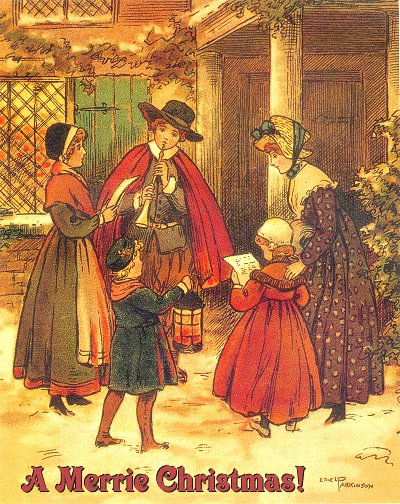
20 November 2006
25 October 2006
Babies and Bathwater
While surfing around for Christmas books, I came upon this website for librarians about culling out older holiday books. I found it rather sad, because I love old books.
Certainly I understand where the school may be coming from. As much as I like reading these old books, there are times when the blatant racism makes me pause. I remember how it bothered me to read old books where the villians were evil Italian organ grinders (like in The Five Little Peppers and How They Grew) or "dirty, smelly" Italians were featured; it was a big jolt to think that everyone didn't like my ethnic group. And I wince when I read the old series books with "typical Negro dialect" and lazy, shiftless "darkies" (like "Eradicate" in the Tom Swift books) and the "greasers" typically portrayed in books set out West. It baffles me after reading books, especially those for children, that used strong vocabularies, daring settings, and sturdy characters suddenly descending into portrayals of stereotypical ethnic and racial characters, how intelligent people could have ever believed these things.
But there they are. It's, for better or worse, what we were, what children had ingrained into them at a young age and then passed on to their children. Thankfully no one except some equally baffling extremists who rail on about "racial purity" believes that rot any longer.
Must the ideas in the books be tossed out, too? Perhaps, as long as they are in good shape, might the books be put into a special section for historical purposes, to be read by older people who understand "this is how it was" and discard the hurtful chaff for a portrait of the times? One of the collecting shows on the Treasure HD channel featured a young African-American man who collects cookie jars, statues, tools, etc. featuring blackface characters, mammys, Pullman porters, etc. He says they make him sad to know that people believed in the stereotypes portrayed by these sculptures, but that it happened and that thankfully we were past producing such things, that they were now tools in which to show people that times have changed for the better. Cannot the old books do the same?
Certainly I understand where the school may be coming from. As much as I like reading these old books, there are times when the blatant racism makes me pause. I remember how it bothered me to read old books where the villians were evil Italian organ grinders (like in The Five Little Peppers and How They Grew) or "dirty, smelly" Italians were featured; it was a big jolt to think that everyone didn't like my ethnic group. And I wince when I read the old series books with "typical Negro dialect" and lazy, shiftless "darkies" (like "Eradicate" in the Tom Swift books) and the "greasers" typically portrayed in books set out West. It baffles me after reading books, especially those for children, that used strong vocabularies, daring settings, and sturdy characters suddenly descending into portrayals of stereotypical ethnic and racial characters, how intelligent people could have ever believed these things.
But there they are. It's, for better or worse, what we were, what children had ingrained into them at a young age and then passed on to their children. Thankfully no one except some equally baffling extremists who rail on about "racial purity" believes that rot any longer.
Must the ideas in the books be tossed out, too? Perhaps, as long as they are in good shape, might the books be put into a special section for historical purposes, to be read by older people who understand "this is how it was" and discard the hurtful chaff for a portrait of the times? One of the collecting shows on the Treasure HD channel featured a young African-American man who collects cookie jars, statues, tools, etc. featuring blackface characters, mammys, Pullman porters, etc. He says they make him sad to know that people believed in the stereotypes portrayed by these sculptures, but that it happened and that thankfully we were past producing such things, that they were now tools in which to show people that times have changed for the better. Cannot the old books do the same?
10 October 2006
The Last Volume
There was no way I could miss knowing about St. Nicholas magazine, given that I had read so many old children's books, especially those from the last century. Its name tended to be sprinkled here and there in various texts and biographies. Therefore when I found a nearly pristine May 1917 issue in a local bookstore many years back, I had to grab it, if nothing else just because the issue was published three months after my mother's birth. It was interesting to see what type of stories the children liked in those faraway days of World War I and suffragettes, and the advertisements for the latest things and also for private schools and camps, not to mention the news of the day in "The Watch Tower" column.
Later I found Henry Steele Commanger's St. Nicholas Anthology (mixed up with the Christmas books, of course; even the booksellers never seemed to "get" that this was not a Christmas magazine despite the title) and reveled in the old stories.
But it's when I found an 1888-1889 bound volume in Boston's Brattle Bookstore that my mania really began. After reading the volume I wanted more of the series.
Thanks to e-Bay and bookfinder.com (sadly, I never found another affordable volume in a bookstore), I started to collect the bound volumes one by one, most of them at very reasonable prices. I paid my limit (under $30) for one volume that was hard to find, one of the two volumes that featured color Arthur Rackham prints to fairy tales. It horrified me that people were buying these volumes just for the artwork—in fact, the one I paid the limit for actually had the Rackham illos torn out, but since I wasn't buying them for the color plates I didn't really care—and bidders were cheerfully advised by several sellers that you could "cut out the artwork and toss the rest of the volume away"!
One thing I discovered about halfway through collecting, by dint of purchasing a single 1935 issue, was that I actually did not want to collect the entire series. Somewhere in the very early 1930s, St. Nicholas' publisher fell victim to the Depression and sold the magazine to another company. The stories, as I discovered, although still more adult in tone than things marketed to children now, suffered such a decrease in quality that it was depressing. The illustrations were equally simplistic and the magazine was even advertising things like girls' fashions from expensive stores like Bonwit Teller as part of the content of the magazine. So I decided that I would stop with early 1930 and be done with it although I was probably safe ordering the remainder of the year (I think the sale was in 1931).
Eventually, except for five single issues and one six month volume (May through October of 1928), I had collected all the volumes I wanted. And what a reading feast, from children dressed in "roundabouts" and "trowsers" (yes, that's how it was spelled in 1873 and that big rock was spelled "bowlder") riding horse cars and carriages—of much interest are accounts of the western movement by people who were actually along the trail, like "The Boy Emigrants," a tale of hardship and travel that bely the scrubbed Ingalls on the television series—and reading of the latest experiments with electricity, all the way through to boys in caps and sneakers and girls in Mary Janes and party dresses traveling in automobiles and reading about the latest exploits of aviators. From the bucolic owners of Tinkham's tide mill to the independent "careless Kincaid" girls, from quaint natural histories through instructions for putting together your own radio. Rose Campbell, Cedric Errol, Sara Crewe, Fisher's Elizabeth Ann/Betsy, Jack Hazard, and Queen Ixix of Ix, not to mention Barbour's Tom, Dick and Harriet and other sports figures and Seaman's clever heroines all drew their first breaths in those pages. Stories, poems, puzzles, travelogues, history, humor, biography...the best reading feast ever.
It was actually Rosemary and Delight Kincaid who finally brought me that final 1928 volume a couple of weeks ago, when I realized that I wouldn't be able to finish reading "Those Careless Kincaids" if I didn't purchase it. Luckily a volume turned up on e-Bay just after I read the penultimate installment in the previous bound volume and I was able to snag it.
And I don't even like Rosemary and Delight all that much...but I do love St. Nicholas.
Try a little bit: you may, too!
A Tribute to St. Nicholas Magazine
(By the way, I was quite "chuffed" to notice that someone had used that web page as a source for a research paper on the magazine!)
Later I found Henry Steele Commanger's St. Nicholas Anthology (mixed up with the Christmas books, of course; even the booksellers never seemed to "get" that this was not a Christmas magazine despite the title) and reveled in the old stories.
But it's when I found an 1888-1889 bound volume in Boston's Brattle Bookstore that my mania really began. After reading the volume I wanted more of the series.
Thanks to e-Bay and bookfinder.com (sadly, I never found another affordable volume in a bookstore), I started to collect the bound volumes one by one, most of them at very reasonable prices. I paid my limit (under $30) for one volume that was hard to find, one of the two volumes that featured color Arthur Rackham prints to fairy tales. It horrified me that people were buying these volumes just for the artwork—in fact, the one I paid the limit for actually had the Rackham illos torn out, but since I wasn't buying them for the color plates I didn't really care—and bidders were cheerfully advised by several sellers that you could "cut out the artwork and toss the rest of the volume away"!
One thing I discovered about halfway through collecting, by dint of purchasing a single 1935 issue, was that I actually did not want to collect the entire series. Somewhere in the very early 1930s, St. Nicholas' publisher fell victim to the Depression and sold the magazine to another company. The stories, as I discovered, although still more adult in tone than things marketed to children now, suffered such a decrease in quality that it was depressing. The illustrations were equally simplistic and the magazine was even advertising things like girls' fashions from expensive stores like Bonwit Teller as part of the content of the magazine. So I decided that I would stop with early 1930 and be done with it although I was probably safe ordering the remainder of the year (I think the sale was in 1931).
Eventually, except for five single issues and one six month volume (May through October of 1928), I had collected all the volumes I wanted. And what a reading feast, from children dressed in "roundabouts" and "trowsers" (yes, that's how it was spelled in 1873 and that big rock was spelled "bowlder") riding horse cars and carriages—of much interest are accounts of the western movement by people who were actually along the trail, like "The Boy Emigrants," a tale of hardship and travel that bely the scrubbed Ingalls on the television series—and reading of the latest experiments with electricity, all the way through to boys in caps and sneakers and girls in Mary Janes and party dresses traveling in automobiles and reading about the latest exploits of aviators. From the bucolic owners of Tinkham's tide mill to the independent "careless Kincaid" girls, from quaint natural histories through instructions for putting together your own radio. Rose Campbell, Cedric Errol, Sara Crewe, Fisher's Elizabeth Ann/Betsy, Jack Hazard, and Queen Ixix of Ix, not to mention Barbour's Tom, Dick and Harriet and other sports figures and Seaman's clever heroines all drew their first breaths in those pages. Stories, poems, puzzles, travelogues, history, humor, biography...the best reading feast ever.
It was actually Rosemary and Delight Kincaid who finally brought me that final 1928 volume a couple of weeks ago, when I realized that I wouldn't be able to finish reading "Those Careless Kincaids" if I didn't purchase it. Luckily a volume turned up on e-Bay just after I read the penultimate installment in the previous bound volume and I was able to snag it.
And I don't even like Rosemary and Delight all that much...but I do love St. Nicholas.
Try a little bit: you may, too!
A Tribute to St. Nicholas Magazine
(By the way, I was quite "chuffed" to notice that someone had used that web page as a source for a research paper on the magazine!)
03 August 2006
Voices from the Past
Here's a great site about series books (mostly for girls, but there are a couple of boys' series, too), which includes photos of the books, plot synopses, etc. I'd give my eyeteeth to read some of these!
Series Books for Girls
One of the more interesting pages is about the Whitman Authorized Series which featured actresses like Jane Withers, Dorothy Lamour, Betty Grable, etc. in mysteries.
Series Books for Girls
One of the more interesting pages is about the Whitman Authorized Series which featured actresses like Jane Withers, Dorothy Lamour, Betty Grable, etc. in mysteries.
Subscribe to:
Posts (Atom)